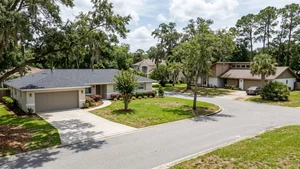
Single-family homes in Longwood are going under contract in about 35 days right now, provided they're priced in line with recent neighborhood sales. From the day you decide to list until the day proceeds hit your account, the full timeline usually spans about three months.
Days on market is only one piece of it. How fast your sale moves depends on how quickly you finish repairs, how long the buyer's financing takes, and whether your HOA documents are ready when the buyer needs them. Plan ahead and you can coordinate your move without scrambling.
Key takeaway
Plan on about 35 days for a fairly priced Longwood single-family home to go under contract. Budget roughly three months from prep to proceeds once you add the inspection, appraisal, and closing periods. Pricing near recent single-family sales keeps you on that pace. If you need the money by a fixed date, comparing a cash offer against a traditional listing trades some price for a shorter, more predictable closing.
Who this guide is for
You're planning to sell a home in Longwood and need a realistic timeline to coordinate your move, your next purchase, or your list price.
How long does it take to sell a house in Longwood, FL?
Expect a single-family house to take about five weeks to go under contract if it's priced near comparable sales, and roughly three months from preparation to final proceeds. Redfin defines median days on market as the number of days between when a listing goes active and when it goes under contract. That metric ignores the weeks you spend getting the house ready and the month you spend waiting for the buyer's loan to close.
The current all-homes median sits at 38 days, which means single-family properties are moving slightly faster than the overall market. Longwood has 3.7 months of supply for single-family homes, so buyers have a steady stream of choices. Because they have alternatives, your list price and property condition decide whether you beat or miss that five-week median. Check the Longwood housing market trends for broader seasonal shifts.
At a glance
Median sale price, single-family: $394,843, down 1.3% year over year (90 days ending Sept. 30, 2026)
Median sale price, all homes: $349,833, down 12.3% year over year (90 days ending Sept. 30, 2026)
Median days on market: 35 for single-family, 38 for all homes (90 days ending Sept. 30, 2026)
Sale-to-list price: 97.8% for single-family, 97.6% for all homes (90 days ending Sept. 30, 2026)
Share sold above list price: 15.8% for single-family, 14.9% for all homes (90 days ending Sept. 30, 2026)
Months of supply: 3.7 for single-family, 3.9 for all homes (90 days ending Sept. 30, 2026)
Homes sold: 39 single-family, 48 all homes (90 days ending Sept. 30, 2026)
Active inventory: 46 single-family, 61 all homes (90 days ending Sept. 30, 2026)
Median price per square foot: $239 for single-family, $223 for all homes (90 days ending Sept. 30, 2026)
Condos and townhomes: fewer than 10 sales in the window, so not reported separately
How to estimate your own selling timeline
Your exact schedule depends on your specific property and your goals. A few questions will point you to the most relevant sections of this guide.
Do you need the money by a fixed date, such as a purchase closing or a job start? If yes, jump ahead to the closing step and the section on what to do when your home isn't selling, which covers the cash-sale option.
Does your home need repairs, updates, or cleanup before photos? If yes, start with the preparation step. That's where most timelines slip before the clock even starts.
Is your planned list price in line with recent single-family sales nearby, or above them? If you're planning to test a higher price, read how pricing affects your speed before you set a launch date.
Is your home a condo or townhome rather than a single-family house? Fewer than 10 such sales were recorded in the 90-day window, so city-wide figures won't describe your market. Skip to the pricing section and ask for building-specific comparable sales instead.
Longwood home selling timeline, step by step
Breaking the sale into four distinct phases gives you a realistic calendar. The clock starts the day your listing goes live on the multiple listing service, not the day you decide to sell.
Every transaction moves at its own pace, but the sequence of events stays consistent. From painting the baseboards to handing over the keys, each phase has specific tasks and its own places where things can slow down.
Preparing your home to list
This step typically takes two to four weeks, and it's the most variable part of the whole process. It also sits entirely in your control. Tasks include completing minor repairs, decluttering, scheduling professional photos, and pulling your HOA documents early. You'll need to complete Florida's required seller disclosures as well.
Florida requires home sellers to give buyers a written flood disclosure covering prior flood damage, insurance claims, and federal assistance received. You can review the specifics of this flood risk requirement before you fill out the paperwork.
Open permits or unfinished repairs discovered now can delay your launch by weeks. Check your permit history with the City of Longwood or Seminole County building department before you commit to a list date.
Time on the market until you accept an offer
Once your home is live, half of the single-family homes that sold in Longwood over the summer went under contract in 35 days or less. Price near comparable sales and you should plan for about five weeks of showings.
If showings and feedback are thin after the first two weekends, the list price is the most likely culprit. Buyers are comparing your property to every other active listing, and they'll pass on a home priced above its neighborhood baseline without much debate.
What you give up with aggressive pricing is time. The median statistic counts only homes that successfully sold. Listings that expired or were withdrawn don't appear in it, so an overpriced home can sit well past five weeks without ever showing up in that number.
Inspection and appraisal period
After you accept an offer, the buyer's inspection window opens. Florida's standard AS IS contract gives the buyer a 15-day inspection window by default, during which they can cancel the agreement for any reason and receive their deposit back. During this period, a buyer may submit repair requests or ask for closing cost credits.
For financed offers, the buyer's lender will order an appraisal to confirm the home's value matches the purchase price. The appraiser schedules a visit, and the report typically comes back a week or two later.
A deal can unravel or be renegotiated here. A low appraisal on a property priced above comparable sales can force a price cut after you thought you were done negotiating.
Closing and getting paid
The final phase covers the title search, the payoff of your existing mortgage, and the HOA estoppel certificate. Recent data from ICE Mortgage Technology shows the average purchase loan closes in about 36.8 days. During this time, the title company checks for liens and prepares the final settlement statement.
If you live in an HOA community, Florida law gives the association 10 business days to deliver the required estoppel certificate outlining any fees or violations. Request a mortgage payoff statement from your lender and check for any prepayment penalty as soon as you go under contract.
Title problems, a slow lender, or a late estoppel can push closing past the contract date. For a worked example: if you list in mid-October, you can expect to go under contract around five weeks later in late November, and close after the roughly 37-day financed closing period in early January.
How pricing affects how fast you sell in Longwood
A traditional listing priced near recent single-family sales is your best path if you want the highest likely price and can give the process about three months from prep to proceeds. Single-family homes in Longwood are closing at 97.8% of their list price. On a $400,000 asking price, that puts the final sale roughly $8,800 below list.
Bidding wars happen, but they're not the norm. Only 15.8% of single-family homes sold above list price recently. Pricing at or just under recent single-family comparable sales is what keeps you from becoming a stale listing.
The overall all-homes median sale price fell 12.3% year over year, but that mostly reflects a shift in what sold. Single-family values fell only 1.3%. Price your single-family home against recent single-family sales, not that headline number. Since values vary by subdivision, reviewing the best neighborhoods in Longwood helps you understand your specific local competition.
For condos and townhomes, city-wide figures mostly describe single-family homes because the 90-day window produced too few condo and townhome sales to report separately. Ask for building- or community-specific sales comps to get an accurate timeline.
What to do when your Longwood home isn't selling
If your listing passes the five-week mark without an offer, buyers are finding better options elsewhere. With 46 active single-family listings on the market, they have steady alternatives to an overpriced home. Start by reviewing showing feedback to see whether buyers are objecting to the layout, the condition, or the price.
From there, adjust your price against the current competition. If condition or presentation is the issue, minor updates or staging can improve how the home shows online and in person.
If you need money in hand by a fixed date with fewer contingencies, comparing a cash offer against a listing is a practical alternative. A cash sale skips the lender appraisal and loan approval, though you would forgo the sale-to-list outcome a traditional listing typically achieves. Todd Schroth's team at eXp Realty can prepare a price and timeline estimate for a specific address to help you decide which route makes more sense.
Seller closing costs in Longwood
Selling a home comes with expenses that reduce your final payout. Using the single-family median sale price of $394,843, you'll owe the Florida Documentary Stamp Tax on the deed. At a rate of $0.70 per $100, that tax works out to about $2,764.
In Seminole County, local custom has the seller paying for the owner's title insurance policy and selecting the title agent. You'll also need to account for prorated property taxes and your remaining mortgage payoff.
Real estate commissions are negotiable and will be deducted from your proceeds at the closing table. Confirm prorated property taxes and final closing costs on your settlement statement with your title company. This is not legal or financial advice.
Longwood home selling timeline FAQs
Which week in 2026 is the best to sell a house in Longwood?
According to Realtor.com's 2026 Best Time to Sell Report, the week of April 12-18, 2026 is identified as the best week nationally to list a home, yielding faster sales and more views. That said, the Orlando Regional Realtor Association reported that properties stayed on the market slightly longer in late 2025, with a metro-wide average of 78 days to contract in December. Pricing your home correctly matters more than picking a specific week on the calendar.
What is the hardest month to sell a house in Longwood?
December is typically one of the slower times to secure a contract in the region. The Orlando Regional Realtor Association reported a metro-wide average of 78 days on market in December 2025, up from 68 days the previous year. Listing during this period means fewer active buyers and longer exposure on the market.
How much commission will I pay on a $350,000 home in Longwood?
Real estate commissions are negotiable, and there's no standard rate. Following the 2024 NAR settlement, MLS listings no longer include an automatic offer of compensation to the buyer's broker, meaning seller payment of a buyer's agent commission is negotiated in the purchase agreement. If you negotiate a total 5% commission on a $350,000 sale, you'd pay $17,500 at closing.
How long after buying a house can you sell it without paying capital gains tax?
There's no legal waiting period to sell your home. To qualify for the federal exclusion of up to $250,000 for single filers or $500,000 for married couples filing jointly, IRS Publication 523 requires you to own and live in the home for two of the last five years. Florida has no state income tax on the gain, but talk to a tax professional about capital gains before selling a home you've owned for less than two years.
How long does a cash sale take to close in Longwood?
A cash sale can often close in a few weeks because it skips the lender appraisal and loan approval process. The timeline still depends on the title search and the HOA estoppel certificate deadline, which gives the association 10 business days to deliver the documents. Get a firm closing date from the buyer and title company in writing.
Do I have to disclose flood history when selling a home in Longwood?
Yes. Florida Statute 689.302 requires sellers to provide a written flood disclosure to the buyer at or before executing the sales contract. The form covers your knowledge of prior flood damage, flood insurance claims filed, and flood-related federal assistance received. Make sure you know whether your home has had flood damage or claims before you fill it out.
How long does an executor have to sell a house in Florida?
Florida sets no single deadline for an executor to sell a house. The timing is shaped by the personal representative's authority and the probate creditor claims period, which requires claims to be filed within three months after the first publication of the Notice to Creditors. Consult a probate attorney for guidance specific to the estate.
How long after refinancing can I sell my house?
There's no legal waiting period to sell after refinancing. Review your new mortgage note for a prepayment penalty or an owner-occupancy clause. Request a payoff statement from your lender, since a recent refinance changes your payoff amount and final net proceeds.