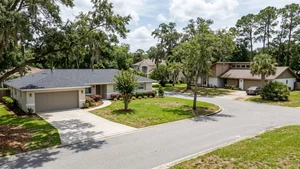
When you sell a single-family home in Longwood, a specific set of taxes, fees, and negotiated costs comes out of your proceeds before anything hits your bank account.
Florida has clear rules about who pays what at closing, but local custom and whatever you negotiate dictate the final math. Seminole County has its own recording fees and property tax schedules, so your net sheet will look different than it would anywhere else in the state.
Key Takeaway
As a Longwood seller, you'll pay Florida's documentary stamp tax on the deed and usually the owner's title policy, plus whatever commission and buyer credits you agree to. The taxes and title premium are set by law and state rates, so your real effort belongs on price and concessions. Single-family homes here sold for a median 97.8% of list over the 90 days ending September 30, 2026, and that gap typically costs more than the fixed fees. If you'd rather avoid credit negotiations, a cash buyer removes lender-driven requests but not the documentary stamps.
Who This Guide Is For
You're planning to sell a home in Longwood and want to estimate what comes out of your sale price at closing before you set a list price or sign a listing agreement.
What Sellers Pay at Closing in Longwood
The closing costs Florida fixes by law are not where a seller's net is won or lost. On the median single-family sale, deed documentary stamps and the owner's title premium come to roughly $4,800 combined. That median sale-to-list ratio implies about $8,900 conceded between list price and sale price.
Pricing to single-family comps, controlling buyer credits, and settling commission terms in writing move your net more than shopping around on fees. The all-homes median fell 12.3% year over year, while single-family moved only 1.3%. If you're selling a house, the headline drop is not your story, so price off single-family comps and don't give away negotiating room you don't need.
On a $400,000 list price, closing a little over 2% below list gives up roughly $8,800. Deed documentary stamps on that same sale run about $2,800. Check the "At a glance" list below, then compare a cash offer to see how different approaches affect your bottom line.
Closing Costs Set by Florida Law and Rates
Florida regulates title insurance premiums and deed taxes statewide, which makes some seller costs simply unavoidable. These charges apply across the board regardless of which title company you use or who buys your home.
You can't shrink these specific lines by shopping around or haggling with providers. The final amount depends entirely on your final sale price.
Documentary Stamp Tax on the Deed
Florida charges documentary stamp tax on the deed at a statewide rate of $0.70 per $100 of consideration. By standard contract terms and local custom, the seller pays this tax.
It scales with price: every $10,000 of sale price adds about $70 to your closing statement. The title or closing agent collects this and remits it when the deed is recorded with the Seminole County Clerk.
One thing to understand: the tax is owed on the full sale price even if you're selling for less than you paid. The only way to shift it is to negotiate it onto the buyer in the contract, which is uncommon and costs you room elsewhere.
Owner's Title Insurance Policy
Florida's title insurance premiums are promulgated by the state, so every title insurer charges the same premium for the same price. In Seminole County, the seller customarily pays for the owner's policy and often chooses the title company, unless the contract says otherwise.
The premium is fixed by rate. What's not fixed: the settlement or closing fee, lien search, courier, and endorsement charges. Recording fees for documents the seller records follow Seminole County Clerk schedules, which currently charge $10 for the first page and $8.50 for each additional page.
Because you can't shop the premium itself, title companies compete on the add-on fees. A low-looking quote can carry a higher settlement fee or extra charges, so ask for a written itemized quote rather than comparing totals by phone.
Closing Costs You Can Negotiate
Real estate commission and buyer credits are the largest variables on your net sheet. These lines depend entirely on what you agree to in writing during the selling process.
Unlike state taxes, these costs give you room to maneuver, and how you handle them directly affects how much cash you walk away with on closing day.
Real Estate Commission
Commission is usually the largest single line on a seller's settlement statement, and it's negotiable in your listing agreement. Following the 2024 industry settlement, whether and how much you offer toward the buyer's agent is a separate decision made in writing.
Every percentage point of commission on a $400,000 Longwood sale is $4,000 off your net. Get the listing commission and any buyer-agent compensation offer in writing before you sign anything.
Cutting commission doesn't always raise your net, though. If a lower offer to the buyer's agent shrinks your showing pool or leads buyers to ask for that cost as a credit, the savings can come right back out at the negotiating table.
Buyer Credits, Repairs, and Concessions
Over the 90 days ending September 30, 2026, all Longwood homes saw a median 38 days on market and 3.9 months of supply. Buyers have enough time and choice to ask for closing cost credits or inspection repair credits, but this isn't a market where you have to say yes to everything.
A credit works like a price cut paid at closing. You can respond to a request with a repair, a credit, or a price adjustment, and each one lands differently on your net sheet. Cash buyers remove lender-driven requests but still negotiate after inspection.
Every dollar of credit comes directly out of your proceeds. A home that sits past the typical 35 days on market for single-family homes draws larger credit requests, so an overpriced listing often ends up paying both the price cut and the credit.
Closing Costs Tied to Your Property
Your loan balance, property tax bill, and community rules create a separate layer of costs at closing. These items vary based on your specific situation rather than the broader market.
This is also where surprises most often happen at the closing table. Ordering the right documents early keeps your timeline intact.
Mortgage Payoff and per Diem Interest
Your loan is paid from proceeds at closing, and the payoff figure is higher than the balance on your monthly statement because interest accrues daily through the payoff date. Some payoffs also include fees and the cost of recording a satisfaction of mortgage.
Request a written payoff statement from your servicer, good through your expected closing date, and ask how long it takes to issue a new one if closing moves. Home equity lines must also be paid and closed.
A closing that slips a week adds a week of interest. A home equity line left open or a forgotten second lien can hold up funding until it's paid and released.
Prorated Property Taxes
Florida property taxes are paid in arrears for the calendar year, so you'll usually credit the buyer for the days you owned the home from January 1 to closing. That shows up as a seller charge even though no bill is due yet.
Selling in June means you hand the buyer roughly half a year's property taxes at closing, even though the bill doesn't arrive until November. Seminole County applies early-payment discounts starting at 4% in November, which affects the final math. Check your property tax bill to estimate this proration.
When the current year's bill isn't out yet, proration often uses the prior year's bill. Read the contract clause and ask the title company which figure they'll use.
HOA Estoppel Certificate and Dues
Many Longwood subdivisions have homeowners' associations, and a closing requires an estoppel certificate showing what's owed. Florida law caps the base fee at $299 for a standard estoppel certificate, with higher allowed charges for expedited delivery or delinquent accounts.
The seller typically pays this fee under standard contract terms. Dues are prorated, and any unpaid assessments come out of proceeds. Ask your association for the estoppel fee, turnaround time, and any pending special assessments before you get to the table.
If the estoppel is ordered late, you can end up paying the expedited fee. A special assessment approved before closing can land on your side of the statement, so ask about pending assessments before you list.
Estimating Your Net Proceeds on a Longwood Sale
Single-family homes in Longwood closed at a median price of $394,843 over the 90 days ending September 30, 2026, based on 39 sales. A home selling at that price typically starts with a slightly higher list price and gives up a small percentage during negotiations, so building that gap into your estimate from the start makes sense.
Deed documentary stamps on that median sale amount to roughly $2,764, based on the state rate of $0.70 per $100. The owner's title insurance premium from the promulgated rate table adds about $2,049 for that same price. You'll also need to add a settlement fee based on a written quote from your chosen title company.
Commission is a variable based on your listing agreement. Every percentage point you agree to pay amounts to about $3,950 on this median sale. A mid-year closing will also require a property tax proration, which deducts a fraction of your annual tax bill from your proceeds to cover the days you owned the home.
Your mortgage payoff is your own specific figure, which includes your principal balance and per diem interest. If you live in a community with a homeowners' association, you'll also pay the estoppel certificate fee, capped at $299 for a standard request under Florida law.
To find your estimated net proceeds, take your final sale price and subtract your mortgage payoff, commission, state taxes, title fees, prorated property taxes, and any agreed-upon buyer credits. Then add back any credits owed to you, such as a prepaid escrow refund from your loan servicer after closing. A cash sale removes lender-driven delays and appraisal issues, but it leaves the documentary stamps and title charges unchanged. These estimates help you prepare for the financial side of selling a home in Longwood.
Where to Focus Before You List
If your home is in an HOA or condo association, add the estoppel certificate and any unpaid assessments to your estimate. Check City of Longwood and Seminole County building records for open or expired permits on your property before listing.
If you still have a mortgage, order a payoff statement and plan for per diem interest past your last payment. Confirm final meter readings and any deposit refund with your water and utility providers.
If your likely buyer is financing, especially with FHA or VA loans, expect requests for closing cost credits and repairs. About 15.8% of single-family homes sold above list price recently, so a well-priced house still has room to decline credit requests.
If you're pricing above recent single-family comps, review the list-to-sale gap, because that gap is the largest variable on your net sheet. Todd Schroth can prepare a Longwood net sheet for your specific home to help you plan your next steps.
At a Glance
Median sale price, all homes: $349,833, down 12.3% year over year (90 days ending Sept 30, 2026; 48 sales)
Median sale price, single-family homes: $394,843, down 1.3% year over year (90 days ending Sept 30, 2026; 39 sales)
Median sale-to-list ratio: 97.6% all homes; 97.8% single-family (90 days ending Sept 30, 2026)
Share sold above list price: 14.9% all homes; 15.8% single-family (90 days ending Sept 30, 2026)
Median days on market: 38 all homes; 35 single-family (90 days ending Sept 30, 2026)
Months of supply: 3.9 all homes; 3.7 single-family (90 days ending Sept 30, 2026)
Homes for sale (inventory): 61 all homes; 46 single-family (90 days ending Sept 30, 2026)
Median price per square foot: $223 all homes; $239 single-family (90 days ending Sept 30, 2026)
Source: Redfin Data Center. These figures rest on 48 total and 39 single-family sales over one quarter, so a few sales can move them. Condo and townhome sales were too few to report separately.
Longwood Seller Closing Costs FAQs
In Florida, Who Typically Pays for Closing Costs?
The seller customarily pays deed documentary stamps and, in Seminole County, usually the owner's title policy. The buyer pays lender costs, including the documentary stamp tax on the mortgage note and intangible tax on the new loan. These are default allocations under the standard contract that can be changed by negotiation.
Who Pays the Most Closing Costs, the Buyer or the Seller?
Once real estate commission is included, the seller's total is often larger. A financed buyer pays lender fees, mortgage stamps, intangible tax, and prepaid items. The final answer depends on the commission agreed upon in your listing agreement and any buyer credits you concede.
What Is the Average Seller Closing Cost on a $300,000 House in Longwood?
No published Longwood average for total seller costs exists, so you have to build it line by line. Deed documentary stamps are about $2,100, and the owner's title premium is roughly $1,575 based on state rates. You'll then add a settlement fee from a written quote, commission at whatever rate is agreed, and an estoppel fee if the home is in an HOA.
What Are the Downsides of a Seller Paying Closing Costs?
A credit reduces your net proceeds dollar for dollar. Loan programs cap how much a seller can contribute, and amounts above the cap can't be used by the buyer. Ask the buyer's lender what their loan allows before agreeing to a credit.
How Often Do Sellers Pay a Buyer's Closing Costs in 2026?
There's no exact percentage, as current market data doesn't track concession frequency. Buyers have enough supply and time on the market to ask for credits, but sellers aren't obligated to agree. Ask for the credits recorded on recent closed Longwood sales comparable to your home to gauge where the market sits.
Do I Need a Real Estate Attorney to Sell a House in Florida?
No, Florida doesn't require an attorney at closing. Licensed title agents commonly conduct closings across the state. Sellers can hire an attorney for complex situations like estates or title problems, and you should get their fee quoted in writing before proceeding.
Do I Pay Capital Gains Tax When I Sell My Home in Longwood?
It depends on your federal tax situation, as Florida has no state personal income tax. Federal tax may apply, subject to the home sale exclusion of $250,000 for individuals or $500,000 for married couples filing jointly. Confirm your eligibility with a tax professional.
How Soon Do I Get My Money After Closing on a Florida Home Sale?
The title or closing agent disburses proceeds after closing once funds are clear and documents are in order. Confirm with the title company whether you'll receive a wire or a check and the expected timing. Verify wiring instructions by phone using a known number to avoid wire fraud.