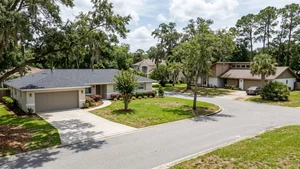
Single-family homes in Longwood, FL sell for a median of $394,843, and most close a couple of percentage points below asking.
Key takeaway
Stage your Longwood house, but size the spend to the gap you're trying to win back between your asking price and the sale price. If you're living in the home, start with decluttering and a staging consultation focused on the main living spaces. Full furniture staging makes the most sense when the house is vacant.
Who this guide is for
You're getting a Longwood home ready to list and deciding how much time and money to put into staging before the listing photos are taken.
What Longwood's market means for your staging budget
Prices for Longwood houses are relatively flat: single-family prices moved just 1.3% down year over year. The 12.3% drop across all property types is mostly a mix effect. Only about 9 non-single-family sales closed in the period, too few to read separately.
On a median-priced house, a 97.8% sale-to-list ratio means you give up about $8,700 below your asking price during negotiations. Only 15.8% of houses recently sold above list, and buyers have about 46 single-family listings and 3.7 months of supply to browse.
Staging is a bid to close part of that gap and shorten your wait, so size your spending against it. Add up your monthly carrying costs (mortgage, insurance, utilities) to see what each extra month on the market costs you.
How to decide how much staging you need
Start with who will be in the house during showings. If it will be empty, go to full staging of a vacant home. If you're living there, begin with decluttering and DIY staging, then consider a staging consultation for an occupied home.
Next, compare your list price with recent Longwood sales. If you're pricing near the top, look at partial staging of key rooms or full vacant staging, because your photos have to justify that price.
Then study your photos. If a buyer couldn't tell what every room is for, stage the rooms buyers judge first, starting with the living room and kitchen. And if your roof, AC, plumbing or electrical systems are older, read staging vs. repairs before you list before spending on furniture.
Home staging options from DIY to full service
Your staging level comes down to trading your own labor and time for money spent. The options below run from cheapest to most expensive, and the right one depends on whether you live in the home while it's on the market.
Decluttering and DIY staging
This is the lowest-cost step and the one that changes your photos the most. Remove a third of your furniture, clear off all personal items and counter clutter, and rent a storage unit or pod. Every seller should complete this step regardless of their total staging budget.
A typical Longwood single-family house recently took a median of 35 days to go under contract, which means a DIY-staged home has to stay photo-ready and showing-ready for at least five weeks. That's a long time to live in a pristine show home.
The other honest downside: it's hard to see your own house the way a buyer does, and your furniture is probably scaled for daily living rather than wide-angle photos.
Staging consultation for an occupied home
A professional stager walks through your house and tells you exactly what to remove, rearrange, buy or rent, then leaves you to do the work. This is the middle ground for furnished homes and the starting point if you're still living in the house.
For the Greater Orlando market, which includes Longwood, a staging consultation typically runs $300 to $500 in 2026. Full occupied home staging averages $800 to $1,200 if you hire the stager to handle the hands-on styling as well.
The catch is that the consultation fee buys advice, not muscle. Hauling boxes, buying accessories, painting and moving furniture to storage are entirely on you. The final result depends on how much of the list you finish before the photographer shows up.
Partial staging of key rooms
Partial staging brings rented furniture and decor only into the rooms buyers judge first. It works well when your own furniture is dated or oversized but you don't want to empty and stage the entire house, and it costs less to start than the full vacant staging described below.
The catch is consistency. Staged rooms sitting next to bare or lived-in rooms can make the unstaged ones look worse, both in photos and during showings. The visual edit has to carry through the whole house to work.
Full staging of a vacant home
Empty rooms photograph smaller than they are and give buyers no sense of scale. That matters when someone is scrolling through local listings trying to picture their furniture in the space.
Full vacant staging in the Orlando area costs roughly $2,000 to $4,500 for the first 60 to 90 days, plus a $300 to $600 install fee. If the home stays unsold, an ongoing monthly furniture-rental cost of about $400 to $800 follows. You'll also need to keep the AC and utilities running to protect the rented pieces and the house itself.
Paying by the month is the real downside: if the house hasn't sold when the rental term ends, you pay again. Many Florida homeowners insurance policies also limit coverage once a home has been unoccupied for a set number of days, usually 30 to 60. Ask your homeowners insurer whether your policy limits coverage once the house is vacant, and after how many days.
Which rooms to stage first
Your staging budget should follow buyers' attention. Some spaces benefit most from rented furniture, while others just need a deep clean and clear surfaces. Pull up photos of recently sold Longwood houses in your price range to see what buyers are comparing your listing against.
Living room and kitchen
These are the rooms buyers judge first in photos. In a 2025 National Association of Realtors staging survey, buyers' agents rated staging the living room most important at 37%, followed by the primary bedroom and the kitchen.
Use proper furniture scale and clear counters, and give flex spaces like a dining nook or Florida room a defined purpose. Single-family homes in Longwood recently sold for a median of $239 per square foot, and buyers discount square footage they can't picture using.
Staging can't hide dated cabinets, counters or appliances, though. Those are condition issues, not styling problems, and buyers will factor them into their offer regardless of the decor.
Primary bedroom and bathrooms
These rooms need neutral bedding, fewer large furniture pieces and clear nightstands to photograph well. Bathrooms should have fresh towels and completely empty counters, aiming for a hotel-like feel.
The downside is that these rooms show wear up close. Stained grout, failing caulk or a dripping faucet is a repair issue, and buyers will notice it in person even if the wide-angle photos look flawless.
Florida room, lanai, and pool area
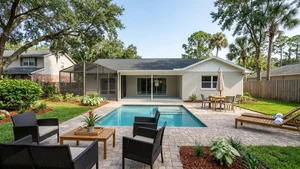
If your house has a screened lanai or pool, show the outdoor space as a usable room. Add a seating set, pressure wash the deck, and make sure the pool water is clear and chemically balanced for photo day. A Florida room should have a clear purpose: home office, reading space or indoor-outdoor dining area.
What you give up is easy maintenance. Outdoor staging pieces have to be secured or brought inside when storms threaten. Torn screen panels, a stained deck or cloudy pool water will show up clearly in both photos and inspection notes.
Curb appeal and entry
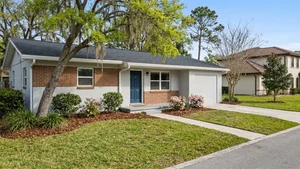
The first listing photo is almost always the front of the house. Pressure wash the driveway, paint the front door, update the house numbers and add fresh mulch to the garden beds.
Lawn recovery needs real lead time. Seminole County lawns can be watered only on assigned days under St. Johns River Water Management District rules, so a brown lawn can't be fixed the week before photos. Confirm your assigned watering days with the district before planning any lawn work. Before you start on paint colors, landscaping or mailboxes, check your HOA's rules and approval timeline, because that process can take longer than your listing schedule allows.
Staging vs. repairs before you list
Fix what an inspection or a buyer's insurer will flag before you buy or rent a single piece of furniture. Know the age of your roof, AC, water heater and electrical panel before listing, because those systems determine whether a buyer can easily insure the property.
Citizens Property Insurance Corporation requires a four-point inspection on applications for homes more than 20 years old. A Florida-licensed inspector checks the electrical, plumbing, HVAC and roof systems. A roof or system that blocks insurability will cost you more at the negotiating table than staging can win back. A pre-listing inspection helps you catch these issues before a buyer uses them to push your price down.
If you'd rather not handle repairs or staging at all, an as-is sale or a cash offer lets you sell the house in its current condition.
How to choose a home stager near Longwood
Check a stager's portfolio and rental terms before you sign anything. Ask for photos of homes they've staged in Central Florida to make sure their style fits your property and price point.
Ask for proof of liability insurance before they start moving heavy furniture through your house. Some professionals carry industry credentials, such as a Real Estate Staging Association certification, which can indicate formal training.
On the contract side, ask for the rental term, the cost of extending it if the house hasn't sold, and who pays for damaged pieces. Confirm their install and removal dates relative to your photo date.
Get help preparing your Longwood home to sell
Schedule a pre-listing walkthrough to decide which rooms to stage and which repairs come first. Pick a listing agent early so your effort goes into the updates that raise your final sale price. The steps for selling a home in Longwood help you plan your timeline.
At a glance
Median sale price, single-family homes: $394,843, down 1.3% year over year (90 days ending 2026-09-30, 39 sales)
Median sale price, all homes: $349,833, down 12.3% year over year (90 days ending 2026-09-30, 48 sales)
Median days on market: 35 for single-family homes, 38 for all homes (90 days ending 2026-09-30)
Median sale-to-list ratio: 97.8% for single-family homes, 97.6% for all homes (90 days ending 2026-09-30)
Share sold above list price: 15.8% of single-family homes, 14.9% of all homes (90 days ending 2026-09-30)
Homes for sale: 46 single-family and 61 total; months of supply 3.7 for single-family and 3.9 for all homes (90 days ending 2026-09-30)
Median price per square foot: $239 for single-family homes, $223 for all homes (90 days ending 2026-09-30)
Home staging in Longwood FAQs
Is paying for staging worth it in Longwood?
It often helps. Per NAR's 2025 Profile of Home Staging, 83% of buyers' agents said staging made it easier for a buyer to envision the property as their future home. In addition, 29% of sellers' agents reported that staging resulted in a 1% to 10% increase in the dollar value buyers offered.
Does home staging increase a home's appraised value?
No. Fannie Mae's Selling Guide states that a one-unit principal residence appraisal may not include personal property such as appliances, furniture or equipment in the opinion of value.
Do home stagers in Florida need a license?
No. Under Florida Statutes §481.229(6)(a) (2025), the state's interior design licensure does not apply to a person who performs interior design or interior decorator services for any residential application.
Can I use AI or virtual staging for my Longwood listing photos?
Yes, with disclosure. Under Stellar MLS Article 04.04, each virtually staged photo needs the words "Virtually staged" in its description field, and the public remarks must begin with "One or more photo(s) was virtually staged." Confirm the wording with your listing agent, and remember that buyers still walk into empty rooms during showings.
What decorating style works best when staging a Florida home?
A light, neutral, uncluttered look that matches the recently sold Longwood homes in your price range. Avoid strong personal themes that distract buyers from the space itself.
Can I pay for home staging at closing?
Some stagers offer deferred or pay-at-close arrangements. Ask how it works if the home doesn't sell or the listing is withdrawn, whether interest or fees apply, and whether the cost comes out of your proceeds on the settlement statement.
Are home staging costs tax deductible when you sell?
IRS Publication 523 does not name home staging as a selling expense. It defines the amount realized as the selling price minus selling expenses such as commissions, advertising fees and legal fees. Confirm the treatment for your situation with a tax professional, as this is not tax advice.
How long does home staging take before I can list?
It depends on the staging level and your home's condition. Ask the stager for the consultation-to-install timeline, book the photographer only after installation is complete, and allow lead time for decluttering, storage and lawn recovery.