Longwood, FL sits just north of Orlando in Seminole County, and it's the kind of market that rewards buyers who show up prepared. If you are buying a home in Longwood, FL, understanding local inventory is key. Homes are spending roughly 27 days on the market before going under contract - that's a short window. You'll find a genuinely wide range of housing here, from attached townhomes to large acreage estates, which means the right fit exists somewhere in this inventory. The trick is knowing where to look.
Your search comes down to three things: budget, property type, and how far you're willing to drive. The city connects directly to Interstate 4 and US Highway 17-92, so getting into downtown Orlando isn't complicated. This guide walks through how the housing stock is distributed, what you can expect to pay, and how to do your homework on specific communities before you make an offer.
Overview of Longwood's Housing Layout
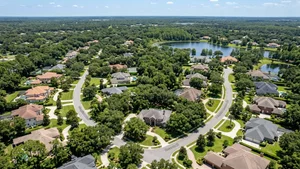
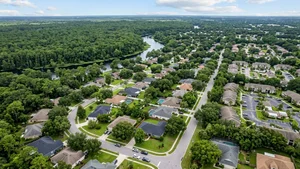
Longwood is organized into a mix of historic downtown streets, mid-century subdivisions, and larger master-planned communities built around local lakes. The city limits stretch roughly from Interstate 4 in the west to US Highway 17-92 in the east. The western side generally features larger lots and lakefront access, while the central and eastern sections offer denser, more established street grids.
Seminole County surrounds the city, placing it between Lake Mary to the north and Altamonte Springs to the south. At any given time there are about 45 active listings in the local housing supply - options exist, but you shouldn't dawdle when something checks all your boxes.
Map and Geography of Longwood
The layout here is largely shaped by water and roads. An interactive neighborhood map shows how communities cluster around places like Lake Brantley and the Wekiva River buffer zones, and those geographic features drive the street patterns - expect winding roads and cul-de-sacs rather than a traditional grid.
The northern sections of Longwood often blend into the neighboring Lake Mary market, sharing access to the Markham Woods road corridor. Southern neighborhoods sit closer to the Altamonte Springs border, which puts you within a shorter drive of the Altamonte Mall and State Road 436. Mapping out your daily commute before you fall in love with a specific subdivision is time well spent.
Longwood Housing by Property Type and Price
The median sale price in Longwood sits at approximately $384,791 as of late 2026 - that number averages out everything from entry-level attached homes to multi-million-dollar lakefront estates, so it's a starting point, not a ceiling or a floor. Homes are generally selling for about 98.9% of list price, meaning sellers are landing very close to what they're asking.
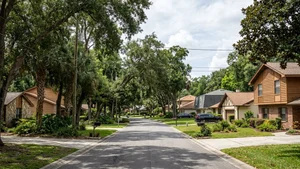
Price tracks closely with age and water proximity. Properties built in the 1970s and 1980s make up a large share of the inventory, typically single-story block construction with mature landscaping. Newer builds and fully renovated homes carry a higher price per square foot regardless of where they sit in the city.
Detached Single-Family Subdivisions
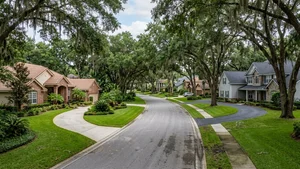
Single-family homes dominate the Longwood landscape - we're talking everything from three-bedroom ranch homes on quarter-acre lots to large custom builds. The subdivisions along the Markham Woods corridor tend toward bigger footprints and specific homeowner association guidelines.
Many of these established neighborhoods include amenities like private parks, tennis courts, and community pools. Factor potential HOA dues into your monthly number before you fall in love with a floorplan.
Attached Homes, Townhomes, and Condos
If lower maintenance is a priority, Longwood has several townhome and condo communities worth a look. These attached homes often list below the city's median price, making them a reasonable entry point into the Seminole County market. Most condo complexes sit closer to the main commercial corridors along State Road 434 and US 17-92.
Townhome communities typically cover shared exterior maintenance and landscaping, and you'll find the bulk of them in the central and eastern parts of the city - close to retail centers and grocery stores.
Historic Districts and Newer Construction
The Longwood Historic District sits near the center of town, with homes dating back to the late 1800s and early 1900s. It's within walking distance of the local SunRail commuter train station, and properties here rarely hit the market. When they do, expect to deal with preserved architecture and specialized maintenance requirements.
Brand-new construction is genuinely hard to find in Longwood. Most of the city was built out decades ago, so new homes are limited to infill development and recently cleared lots. A few newer neighborhoods offer modern energy-efficient designs, but if a completely new home is a hard requirement, inventory here will feel thin.
Profiles of Notable Longwood Areas
Individual subdivisions carry their own housing styles, price brackets, and community rules - and with roughly 50 homes selling each month across the city, inventory rotates constantly through all of them. Most buyers end up targeting specific subdivisions based on the amenities their HOA provides.
When you're evaluating a community, look at median days on market and the specific property boundaries. Some neighborhoods offer private water access; others focus on golf or equestrian facilities. Reviewing deed restrictions and available utilities is standard practice here, not an extra step.
Sweetwater Oaks and Lake Brantley Communities
Sweetwater Oaks is one of Longwood's largest and most recognizable communities, with more than 2,500 homes. Development started in the early 1970s, and most homes currently list between the mid $300,000s and mid $600,000s. Residents have access to a park, tennis courts, and a beach area.
The bigger draw for many buyers is private, gated access to Lake Brantley - a 288-acre spring-fed, sand-bottom lake used for wakeboarding and water skiing. There are no public access points on Lake Brantley, so if using the lake is part of the plan, you need to buy in Sweetwater Oaks or one of the other surrounding waterfront communities. That's not a detail to overlook.
Proximity to Downtown Orlando and I-4
Communities on the western edge of the city sit just minutes from Interstate 4, which runs directly south into downtown Orlando. For buyers who commute into the city center, that access matters.
The eastern side of Longwood leans on US Highway 17-92 and the SunRail commuter train for regional transit. The SunRail station in historic downtown Longwood gives residents a public transit option for reaching Orlando and surrounding municipalities without getting on the interstate at all.
Local Housing Market and Factual Research
Longwood's market currently holds about 2.7 months of housing supply - a competitive environment where buyers outnumber available homes. About 20% of recent sales closed above the original asking price, so well-priced homes are still drawing multiple offers.
Buyers coming from out of state need to research local zoning, crime statistics, and school boundaries before committing to anything. Official county and city resources are where you get accurate, current information on any property you're seriously considering.
Researching Local Crime Data
Skip the third-party rating sites for crime data. The Longwood Police Department and the Seminole County Sheriff's Office both maintain public portals where you can pull incident reports by street or neighborhood.
The FBI Uniform Crime Reporting (UCR) program also provides data on the broader Longwood and Seminole County area. These official sources give you factual information about emergency calls and law enforcement activity near a specific address - which is what matters.
Seminole County Public Schools
All residential addresses in Longwood fall under Seminole County Public Schools. The district sets attendance boundaries for elementary, middle, and high schools based on street addresses and subdivision lines.
Those boundaries can change, so verify current attendance maps directly on the Seminole County Public Schools website. Don't rely on a listing description to tell you which schools serve a specific home - boundary lines sometimes cut straight through the middle of a neighborhood.
Your Next Steps for Buying a Home Here
With a median time on market of 27 days, you don't have much runway. The most desirable homes go under contract in under a month, so monitoring the local MLS daily and having a pre-approval letter in hand before you schedule tours is a practical requirement, not a suggestion.
A local agent who knows Seminole County can help you track new listings in specific subdivisions like Sweetwater Oaks or the historic district, review HOA documents, verify utility providers, and structure a competitive offer based on recent comparable sales. In a market moving this fast, that kind of ground-level knowledge is worth something.
Frequently Asked Questions
Which Longwood neighborhoods are zoned for the best Seminole County public schools?
School attendance boundaries are determined by your exact street address, not the neighborhood name. All homes in the city are served by Seminole County Public Schools, and buyers should check the district's official attendance-zone maps to verify assignments. The district does not rank schools by which is best, so review the specific programs offered at each campus.
What are the typical HOA fees for gated communities along the Markham Woods corridor?
Fees along the Markham Woods corridor vary based on the specific subdivision and what amenities it provides. Communities with private parks, tennis courts, or gated entries generally charge higher monthly or annual dues. Request the current HOA documents for any specific property to confirm the exact fee structure.
Are there any affordable neighborhoods in Longwood, FL for first-time homebuyers?
The median home price in Longwood is roughly $384,791, but lower-priced options exist in the attached housing inventory. First-time buyers often look at townhomes and condo complexes near State Road 434 and US 17-92 for lower entry prices. These attached properties typically list below the overall city median.
How do the neighborhoods in Longwood compare to nearby Lake Mary for families and commuters?
Both Longwood and Lake Mary sit in Seminole County and offer similar access to Interstate 4. Longwood features older, established neighborhoods like Sweetwater Oaks from the 1970s, while Lake Mary has a higher concentration of newer commercial developments. Both cities share the Markham Woods road corridor and are served by the same public school district.
Which areas of Longwood are most prone to flooding or require flood insurance?
Properties near the Wekiva River buffer zones or surrounding local lakes carry a higher potential for flood zone designations. Buyers looking at waterfront subdivisions around Lake Brantley should check the FEMA flood maps for specific addresses. Your mortgage lender will confirm whether a specific property requires flood insurance before closing.
What are the best neighborhoods in Longwood for a quick commute to downtown Orlando?
Neighborhoods on the western edge of Longwood provide the fastest access to Interstate 4, which runs directly into downtown Orlando. Buyers can also look at homes near the historic district in the center of town to use the SunRail commuter train. Both options offer straightforward routes into the city center.
Which Longwood communities offer the best amenities like golf courses and private lake access?
Sweetwater Oaks is the most prominent community for private lake access, offering residents a boat ramp and beach on the 288-acre Lake Brantley. Because Lake Brantley has no public access, buying in a surrounding waterfront neighborhood is required to use it. Other subdivisions in the area feature community pools, tennis courts, and private parks.