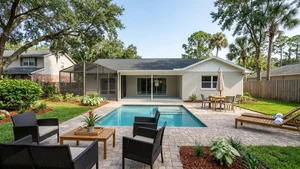
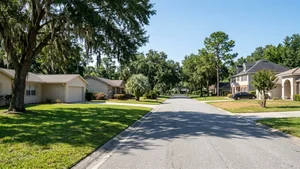
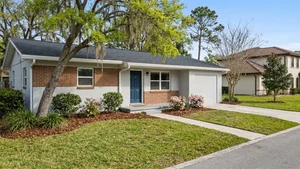
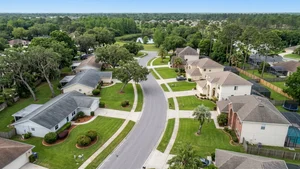
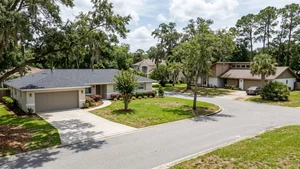
When you look at the housing market in Longwood, FL, you mostly see single-family houses.
Key takeaway
Most homes that sell in Longwood are single-family houses, accounting for 39 of the 48 sales in the 90 days ending September 30, 2026. They range from acreage along Markham Woods to gated communities like The Springs to older, smaller-lot homes in town. Start with single-family if you want the widest choice and enough recent sales to price an offer with confidence. Condos and townhomes offer a lower entry price and less upkeep, but they sell too rarely to have a reliable median, meaning pricing takes more homework.
Who this guide is for
You're planning to buy in Longwood and need to decide which type of home to target before you narrow down neighborhoods and listings.
What types of homes are in Longwood, FL?
Longwood is a single-family market, and houses held their value. The single-family median of $394,843 is down just 1.3% over the past year, while the all-homes median of $349,833 fell 12.3%.
For the bigger picture, see Buying a Home in Longwood.
That wider drop comes from cheaper non-house sales pulling the overall figure down, so house buyers shouldn't expect a 12% discount. The home type you pick decides which market you're in. Houses offer a stable market with plenty of comparable sales. Attached homes are a thin slice with more room to negotiate but less data to back an offer.
Single-family homes on large lots
Buyers after acreage and privacy head to the west side of Longwood, home to the most expensive areas in town. The trade-off is longer drives, more upkeep and managing your own utilities.
Markham Woods
This corridor is the primary area for estate homes and acreage. Seminole County zones property along Markham Woods Road as A-1 (Agriculture), requiring a minimum lot size of one acre and a minimum lot width of 150 feet at the building line. Large lots here often mean a private well and septic system rather than city water and sewer. Ask the seller which the home uses, and get a well and septic inspection before you commit.
Wingfield North
This subdivision has larger custom homes on substantial lots. Deed restrictions can limit additions, fences, outbuildings and parked vehicles, so read the HOA declaration before you plan changes to the lot.
Wingfield Reserve
Wingfield Reserve is a development of 183 custom homes on lots of one acre or more. It has a similar feel to Wingfield North but a separate HOA with its own rules and dues, so terms you confirmed for Wingfield North don't carry over.
Gated and golf course communities
A gate, shared grounds or golf come with HOA dues, rules and less control over common land. Ask each HOA for its budget and rules before comparing homes on list price alone.
The Springs
This community is built around a natural spring, with wooded lots and mature trees. Dues fund the spring and shared grounds. Many homes are older, so check the year built on the property appraiser record and budget for updates on top of the dues.
Sweetwater Oaks
Sweetwater Oaks is a roughly 1,400-home neighborhood with a private beach on Lake Brantley, where residents can go boating, water skiing, fishing and kayaking. It isn't gated. Lake upkeep runs through the HOA, so ask for the current budget and whether any special assessment is planned.
Sweetwater Club
This area appeals to buyers looking for a golf course setting. Golf membership can be separate from HOA membership and cost extra, so ask whether owning a home there includes any course access.
Sabal Point
Sabal Point is organized around the former Sabal Point Country Club course, which closed in 2006. Part of the course was developed into homes, and the remaining fairways became recreational open space and park land. Views here can depend on land the HOA doesn't control, so ask who owns any adjacent open land and what it's zoned for.
Homes in established neighborhoods
Older, smaller-lot houses closer to town are usually the lower-entry way into single-family. The trade-off is the home's age and the need for a renovation budget.
Longwood Village
This is an established in-town neighborhood of older homes on smaller lots, close to city amenities. Older roofs, wiring and plumbing can raise insurance costs or limit which insurers will write a policy. Order a four-point inspection early.
Longwood Hills
Longwood Hills is an established subdivision for buyers who want a house without large-lot or gated pricing. Whether there's a mandatory HOA, and what it covers, varies by section. Confirm it in the seller's disclosure before assuming there are no dues.
Wekiva Springs
Wekiva Springs is a west-side area with a Longwood mailing address, but parts of it sit in unincorporated Seminole County rather than the City of Longwood. Outside city limits, the utility provider, services and tax rates differ from in-city homes. Check the jurisdiction on the property appraiser record for each address.
Homes near the historic district
The Longwood Historic District contains 37 historic buildings and is bounded by West Pine Avenue, South Milwee Street, Palmetto Avenue and CR 427. For building permits in the district, the city's Community Development Department may require review by a licensed architect specializing in historic structures. Permanent signs need a paint permit. Check with the city before you budget a renovation.
Condos, townhomes, and duplexes
Attached homes are the low-upkeep, lower-entry side of the market, and the thin one. All non-single-family types combined had just 9 sales and 15 listings in the 90 days ending September 30, 2026. A sample that small can't support a reliable median, so treat any price figure for these homes as a rough signal.
Condos
More listings than sales suggests room to negotiate, but there are few comparable sales to justify a number.
Florida law sets two requirements for condo buildings:
Milestone inspections: required for condo and co-op buildings three stories or taller by December 31 of the year they turn 30 (25 where local officials require it), then every 10 years.
Structural Integrity Reserve Study: required at least every 10 years for associations with buildings of three or more habitable stories.
Buildings catching up on reserves can raise dues or levy special assessments. Ask the association for its current dues, latest reserve study, milestone inspection status and whether the building is FHA-approved.
Townhomes
In Florida you typically own the land under a townhome, and the HOA covers fewer exterior elements than a condo association does. That means you may need to insure and replace your own roof and exterior. Ask exactly which parts of the building the HOA's policy and dues cover.
Duplexes and small multifamily
Two-to-four-unit buildings are a tiny part of the market. Treat them as an occasional find rather than a category you can actively shop. Pricing rests on rents and older comparable sales, so ask your lender how it treats projected rent before you write an offer.
Lakefront, pool, and 55+ homes
Some buyers shop by feature across neighborhoods.
Lakefront homes
Named lakes within or near the City of Longwood include Lake Orange, Lake Jane, East Lake, Lake Evergreen, Lake Fairy, Lake Searcy, Fern Lake and Lake Wayman. "Lake view" and "lakefront with water access" are different listing claims. Waterfront lots can sit in higher-risk flood zones, so get a flood insurance quote before you make an offer and confirm any dock permits with the seller.
Pool homes
Pools are common in Central Florida single-family homes. Treat a pool as a feature to filter for and price into your offer, not a separate market. A pool can raise insurance costs and adds upkeep, so get an insurance quote that includes it and have the equipment inspected with the house.
55+ and retirement communities
Age-restricted communities offer dedicated amenities and quieter streets. Age rules also shrink the pool of future buyers and may limit renting the home out, so read the community's age and rental rules before you buy.
How to choose a home type in Longwood
School assignment for Longwood schools depends on the exact address, so check Seminole County Public Schools' school locator for each home you consider.
Do you want land or less upkeep?
Land points to single-family homes on large lots such as Markham Woods or Wingfield. Expect mowing, well and septic upkeep, and longer drives. Less upkeep points to condos, townhomes and duplexes, where you pay monthly dues you don't control.
Do you want a gate and amenities?
If yes, focus on the gated and golf course communities, and budget for the HOA dues and rules described above.
How much house does your budget buy?
At the single-family median of $239 per square foot, an 1,800-square-foot house works out to about $430,000. Use that math to set a size target, then compare established neighborhoods with attached options. A median hides lot size, age and condition, so expect real listings to land well above or below it.
How sure do you need to be about price?
Houses have the deepest set of comparable sales, and well-priced ones still draw competition. Attached homes trade so rarely that you'll lean on the appraisal and older comps. If the appraisal comes in below your offer, you'd need cash to cover the gap.
Todd Schroth's team at eXp Realty can pull recent sales for two home types at the same budget to help you compare.
Longwood homes at a glance
Median sale price, all homes: $349,833 (90 days ending 2026-09-30), down 12.3% year over year
Median sale price, single-family: $394,843 (90 days ending 2026-09-30), down 1.3% year over year
Homes sold: 48 all homes, 39 single-family (90 days ending 2026-09-30)
Median price per square foot: $223 all homes, $239 single-family (90 days ending 2026-09-30)
Median days on market: 38 all homes, 35 single-family (90 days ending 2026-09-30)
Sale-to-list ratio: 97.6% all homes, 97.8% single-family; sold above list: 14.9% all homes, 15.8% single-family (90 days ending 2026-09-30)
Months of supply: 3.9 all homes, 3.7 single-family; active inventory: 61 all homes, 46 single-family (90 days ending 2026-09-30)
Condos and townhouses had fewer than 10 sales each in the same window, so no reliable median price is reported.
Housing market trends show where these numbers are heading over time.
Longwood, FL homes FAQs
What are homes in Longwood, FL, built out of?
Common exterior walls are masonry block and wood frame, and the Seminole County Property Appraiser record shows the wall type for any address. Wall type and roof attachment affect wind mitigation insurance credits, so ask the seller for a wind mitigation report.
Is Longwood, Florida, a city or a town?
Longwood is an incorporated city in Seminole County, though a Longwood mailing address doesn't guarantee a home is inside city limits.
What ZIP codes are in Longwood, FL?
The primary ZIP codes are 32750 and 32779, which cover both the city and surrounding unincorporated Seminole County.
How far is Longwood, FL, from Orlando?
Downtown Orlando is about 13 miles away, roughly a 22-minute drive. Longwood is its own city, not an Orlando neighborhood.
Do homes in Longwood need flood insurance?
Lenders require flood coverage in high-risk zones, and owners outside them can still buy it. Look up the address on FEMA's Flood Map Service Center and get a quote before you make an offer.
Are there new construction homes in Longwood, FL?
Yes, though established houses make up most of the inventory. Ask any builder for the warranty terms and HOA documents before signing a contract.
Is now a good time to buy a home in Longwood?
The market looks fairly balanced, with homes recently selling a little below asking, which gives buyers modest room to negotiate. Timing ultimately depends on your finances.