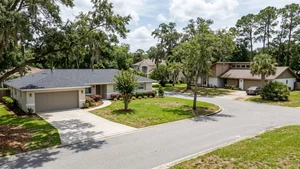
Single-family homes in Longwood, FL recently sold at a median 97.8% of their list price.
Key takeaway
On a financed Longwood purchase, plan for Florida's two loan-only taxes, title and lender fees, and a full year of homeowners insurance due at closing. Then ask the seller to cover part of it with a closing-cost credit. Sellers have room to say yes, as only 15.8% of Longwood houses sold above list price in the 90 days ending September 30, 2026. If the seller refuses, a lender credit in exchange for a slightly higher rate is the fallback.
Who this guide is for
You're about to make an offer on, or are already under contract for, a Longwood home and need to work out how much cash to bring to closing and what to ask the seller to cover.
What are buyer closing costs in Longwood?
That sale-to-list ratio covers the 90 days ending September 30, 2026, and it means part of the closing bill is negotiable. A seller credit cuts the cash due at the closing table dollar for dollar. A same-size price cut trims it by only about a fifth with the down payment used in the example below.
Closing costs are the taxes, fees, and prepaid expenses required to finalize your real estate transaction. This is general information, not legal, tax, or lending advice. Where to start:
If you're financing, start with Florida taxes and recording fees and Lender fees. If you're paying cash, go straight to Closing costs if you pay cash in the example below.
If the home is in an HOA, read HOA estoppel, transfer and capital contribution fees and the step to ask the HOA for its fees in writing before you budget.
If the home is in a FEMA flood zone or has an older roof, your biggest swing items are homeowners insurance for the first year, flood insurance, and wind mitigation and four-point inspections.
If the listing has sat longer than typical or had a price cut, go to the negotiation section and plan a seller-credit request.
Closing costs vs. down payment
The down payment becomes equity in your home; closing costs build none. Lenders verify you have funds for both before approving your loan. A bigger down payment trims only the loan-based lines, so closing costs don't fall in step with it.
Closing costs vs. cash to close
Cash to close equals your down payment plus closing costs and prepaids, minus your earnest money, seller credits, and the seller's share of property taxes. The Closing Disclosure shows this final figure. Earnest money counts toward it only if the deal closes. Miss a contract deadline and that deposit can be lost.
How much are buyer closing costs in Longwood?
Applying a flat percentage to the price often yields an inaccurate budget, because costs depend on the property and your loan. Sort your estimates into three groups and you can scale them to any home.
Costs that rise with your loan amount
Florida's note stamps and intangible tax, the lender's title policy, and discount points all scale with the loan. A larger down payment trims every one of them. Low-down-payment loans carry the heaviest version of this group.
Costs that rise with the purchase price
These include:
the owner's title premium, if your contract assigns it to you
homeowners insurance tied to the home's replacement value
property tax reserves based on your post-sale bill
The seller's exemptions and capped assessment don't carry over to you. Base the property tax math in your household budget on your own future bill.
Flat fees that barely change with price
Appraisal, credit report, settlement fee, recording, survey, and inspections cost roughly the same on a cheaper or a pricier home. On a lower-priced home they make closing costs a bigger share of the price. That's why percentage rules of thumb mislead buyers below the median.
Which Longwood median to budget from
The all-homes median dropped sharply over the past year while single-family prices barely moved. A house buyer who budgets price-based costs from the all-homes headline starts about $45,000 low, so use the single-family figure in the example below. Condo and townhouse sales were too few to report separately, and the all-homes drop isn't a reliable condo price signal either.
Florida taxes and recording fees
These state taxes and county recording fees are a financed buyer's largest fixed-rate costs. They apply uniformly across Seminole County, and no lender or title company can discount them. The only ways to shrink them are borrowing less or getting a seller credit to cover them.
Documentary stamp tax on the mortgage note
Florida taxes the promissory note on a financed purchase at 35 cents per $100 of the amount borrowed. The buyer customarily pays it at closing.
Intangible tax on the mortgage
This one-time tax on the new mortgage is 2 mills, or $2 per $1,000 borrowed. It is due at closing on top of the note stamps.
Documentary stamp tax on the deed
The tax on transferring the deed is 70 cents per $100 of the total consideration. Seminole County custom generally puts it on the seller. If the contract assigns it to you, it becomes one of the largest single lines you'll pay.
Seminole County recording fees
The Seminole County Clerk records the deed and the mortgage, charging $10.00 for the first page and $8.50 for each additional page. The buyer customarily pays to record the mortgage. A long mortgage with multiple riders costs more to record than a short deed.
Lender fees
Under federal rules, your lender must deliver or mail a Loan Estimate no later than the third business day after receiving your application. Sections A and B list the costs of making and funding your loan. Those amounts are specific to your application and vary from lender to lender.
Origination and underwriting fees
Section A shows the lender's own charge for making the loan. A low origination fee can come with a higher interest rate, so compare Section A and the Annual Percentage Rate together across Loan Estimates.
Discount points
Points are optional prepaid interest, and one point equals 1% of the loan amount. Divide the cost of the points by your monthly payment savings to find how many months it takes to break even. Selling or refinancing before then forfeits the money you paid upfront.
Appraisal fee
Most lenders require an appraisal, often paid upfront outside closing; budget the exact amount on your Loan Estimate. The fee isn't refunded if the deal falls through. An appraisal under the contract price becomes a cash or renegotiation problem.
Credit report, flood certification and tax service fees
These small third-party charges cover the checks needed to originate the loan. Ask your lender what each line covers if the Section B total looks high.
Title and settlement fees
Florida title insurance premiums are set by state rule. The rate is $5.75 per thousand for the first hundred thousand dollars of coverage, then $5.00 per thousand up to $1 million. The policy costs the same at any agency, so shopping for title saves money only on the settlement fee and searches. The contract sets who pays which policy, and those terms are negotiable.
Lender's title insurance
Lenders require this policy to protect their loan. When it's issued alongside an owner's policy, it carries a simultaneous-issue minimum charge of $25. It protects the lender's loan, not your equity, and pays you nothing on a title claim after closing.
Owner's title insurance
This policy protects your ownership and equity. In Seminole County it's customarily seller-paid unless the contract says otherwise. Whoever pays usually picks the title agent, so if the seller pays, you generally don't choose who handles your closing.
Title endorsements
Endorsements are lender-required add-ons to the lender's policy, priced from the state schedule. They cover specific risks such as environmental liens or planned unit developments. You can't decline them, and they almost always land on the buyer.
Settlement fee
The closing agent's fee covers running the closing, preparing documents, and disbursing funds, and it isn't state-set. Some agents charge both sides a full fee and others split it, so ask before the title company is chosen.
Title search and municipal lien search
The title search looks for recorded liens. The municipal lien search turns up open permits, code fines, and utility liens tied to the address. Under the standard contract, the seller pays for it if the seller-pay title option is checked. An open permit or code fine can delay closing until it's closed out or credited.
Survey
A survey removes the title policy's boundary and encroachment exceptions; get a quote from a surveyor. Skip it and the policy keeps exceptions for fences, setbacks, and encroachments, leaving those risks with you.
Prepaids, escrow deposits and HOA charges
Prepaids and escrow deposits are your own future housing costs, collected upfront. In Florida, insurance and property taxes often create the largest swings in what you owe at closing, so gather quotes early.
Homeowners insurance for the first year
Your lender requires the first year's premium paid in full at or before closing, plus a reserve to start next year's escrow. Florida premiums depend on roof age and wind features, so two similar homes can quote very differently.
Flood insurance
Lenders require flood insurance in FEMA special flood hazard areas. Look up the address on the FEMA Flood Map Service Center. That official zone, more than Longwood's general flood risk, decides whether your lender requires a policy. Outside a required zone it's optional, and going without means carrying the flood risk yourself.
Property tax reserves and proration
The lender collects several months of property taxes into escrow at closing. Florida property taxes are paid in arrears, so the seller credits you for the days they owned the home during the year. Reserves sized from the seller's lower tax bill can leave an escrow shortage the next year, which raises your monthly payment.
Prepaid mortgage interest
This is daily interest from the closing date to the end of that month. A late-month closing shrinks this line but only shifts the timing; you pay the same interest over the life of the loan.
HOA estoppel, transfer and capital contribution fees
Florida caps the estoppel certificate fee at $250 when no delinquent amount is owed. Added charges are allowed for expedited delivery or a delinquent account. The standard contract puts this fee on the seller, though that's negotiable. Transfer fees and capital contributions are set by each association, and capital contributions are the line most likely to surprise you at closing.
Inspection costs paid before closing
You pay inspectors directly during the contract's inspection period. These costs don't appear on the closing statement but belong in your budget, so get quotes from local inspectors.
General home inspection
It covers the condition of the home's major systems. You pay for it even if the findings lead you to cancel the contract.
Wind mitigation and four-point inspections
An older Longwood home will likely need a four-point inspection before an insurer will write a policy, and insurers use wind mitigation reports to price coverage. Ask whether the seller has a current wind mitigation report you can use for a discount. A failed roof, electrical, or plumbing item on the four-point can make coverage hard to get and stall your closing.
Wood-destroying organism inspection
Some loan programs require a termite and wood-destroying organism inspection; ask your lender whether yours does. Evidence of past treatment can draw lender and insurer questions even when the problem is fully resolved.
Who pays closing costs in Longwood, the buyer or the seller?
Under the standard Florida Realtors/Florida Bar AS IS contract, the buyer pays for the survey, the lender's title policy, and endorsements by default. Checkboxes in the form can shift major costs either way. Seminole County custom on owner's title and deed stamps differs from some South Florida counties, but the signed contract decides who pays.
Costs the buyer usually pays
The buyer usually covers loan taxes, lender fees, lender's title and endorsements, mortgage recording, prepaids, and inspections. A seller credit can offset any of them.
Costs the seller usually pays
Seller-side closing costs typically include the deed stamps, owner's title insurance, the seller's own loan payoff, and brokerage commissions. A seller who agrees to a closing-cost credit may hold firmer on the purchase price or repair requests later.
Costs the contract can shift
Title, survey, settlement fee, municipal lien search, HOA fees, and a home warranty can all move between the parties by contract. Read the title section before signing, because a checked box can move the owner's title premium onto you. Shifting more costs to the seller can also make your offer weaker than a competing offer that asks for nothing.
Example closing costs on a Longwood single-family home
Use this as a framework for your own estimate, substituting the lender fees and insurance quotes from your Loan Estimate.
The purchase assumptions
Assume a purchase price equal to the single-family median of $394,843. At 20% down ($78,969), you'd take out a loan of $315,874. Your rate, lender fees, and insurance quote will move the final total.
Florida loan taxes in the example
On the $315,874 loan, the note stamps come to about $1,106 and the intangible tax to about $632. Together that's roughly $1,738, at Florida Department of Revenue rates.
Title and settlement costs in the example
Your bill includes the lender's simultaneous-issue policy and endorsements from the state schedule. It also includes the settlement fee and searches from your title company's quote. If the contract assigns the owner's premium to you, the state-promulgated rate on that price is about $2,049. That makes it the biggest single jump in the example.
Lender fees and prepaids in the example
Fill these lines from your own Loan Estimate:
origination fee
appraisal
credit and flood fees
first-year insurance premium
tax and insurance reserves
prepaid interest
Prepaids are the lines most likely to change between the Loan Estimate and the Closing Disclosure.
Cash to close, with and without a seller credit
Using the cash-to-close formula above, a $5,000 seller credit lowers cash due by that full amount. The same price cut lowers it by about $1,020: $1,000 of down payment plus about $22 in loan taxes. A credit can't exceed your actual closing costs and prepaids, and specific loan programs cap the maximum percentage allowed.
Closing costs if you pay cash
Cash buyers drop the loan taxes, lender fees, lender's title policy, appraisal, and escrow reserves entirely. They still pay the settlement fee, owner's title if assigned by contract, prorations, and inspections. With no lender requiring an appraisal or survey, skipping them leaves that risk with you.
How to negotiate buyer closing costs in Longwood
Longwood single-family homes sat on the market for a median 35 days over the 90 days ending September 30, 2026. That pace gives buyers room to ask for concessions on homes that have lingered.
Reading the market before you ask
Listings past about five weeks, or with a price cut, are the natural candidates for a credit request. The 3.7 months of supply gives you options if a seller refuses. Well-priced new listings can still draw over-asking offers, and a credit request on one of those can cost you the house.
Seller credit vs. price reduction
A credit protects your cash today, while a price cut lowers your payment for the life of the loan. Choose based on whether cash or monthly payment is your tighter constraint. A credit added on top of the list price needs the appraisal to support that higher number, or the deal has to be reworked.
Lender credits
The lender covers part of your closing costs in exchange for a higher interest rate. You repay it through that rate for as long as you keep the loan.
Services you can shop for
The Loan Estimate lists the services you can shop for. These include the title agent when the contract allows, the surveyor, inspectors, and your homeowners insurance carrier.
Down payment and closing cost assistance
Florida Housing Finance Corporation programs can cover part of your closing costs; check the Florida Housing Finance Corporation for current 2026 programs and approved lenders. Programs come with strict income and price limits and approved-lender lists, and some are second liens repaid when you sell. Todd Schroth's team at eXp Realty can help structure a credit request, and you can contact an agent for assistance.
How to estimate your own closing costs
Request Loan Estimates from two or three lenders
Apply with two or three lenders and compare Section A and the rate side by side. Until you lock the rate, Loan Estimate figures can move.
Confirm who pays title in your contract
Before signing, note who pays for owner's title insurance, the survey, and the municipal lien search. Once the contract is signed, changing these terms takes the seller's agreement.
Price insurance during the inspection period
Get homeowners and flood insurance quotes using your inspection and wind mitigation reports while you can still renegotiate the contract. After the inspection period ends, a high quote can no longer be used to renegotiate or exit the deal without penalty.
Ask the HOA for its fees in writing
Ask the association or management company for the exact estoppel, transfer, and capital contribution amounts, along with current dues. Verbal figures from a manager aren't binding; only the written estoppel certificate is.
Compare the Closing Disclosure with your Loan Estimate
You must receive the Closing Disclosure at least three business days before loan consummation. Check each line against your original Loan Estimate. Certain late changes restart the waiting period and can push your closing date back. Review the Closing Disclosure carefully before closing as part of the full buying process in Longwood.
At a glance
Median sale price, single-family homes: $394,843 (90 days ending Sept. 30, 2026; 39 sales)
Median sale price, all homes: $349,833, down 12.3% year over year (90 days ending Sept. 30, 2026; 48 sales)
Single-family median price change: down 1.3% year over year (90 days ending Sept. 30, 2026)
Sale-to-list ratio: 97.8% for single-family homes, 97.6% for all homes (90 days ending Sept. 30, 2026)
Share of homes sold above list price: 15.8% single-family, 14.9% all homes (90 days ending Sept. 30, 2026)
Median days on market: 35 single-family, 38 all homes (90 days ending Sept. 30, 2026)
Months of supply: 3.7 single-family, 3.9 all homes (90 days ending Sept. 30, 2026)
Homes for sale: 46 single-family, 61 all homes (90 days ending Sept. 30, 2026)
Longwood buyer closing costs FAQs
How much are closing costs in Florida for buyers?
ClosingCorp data puts the average Florida buyer closing cost at around 2.3% of the purchase price, excluding commissions. That is roughly $9,416 on a median-priced Florida home near $409,400.
What are closing costs on a $300,000 or $400,000 house in Longwood?
On a $300,000 mortgage, Florida's note stamps come to $1,050 and the intangible tax adds $600. On a house near $400,000, an owner's title premium assigned to you runs about $2,049 at the state rate, as in the example above. Lender fees and insurance come from your own Loan Estimate.
Who pays the most closing costs in Florida?
The seller usually pays the larger total, because the deed stamps on the full price and the commissions customarily fall on the seller. The contract sets the final split.
Is 5% closing cost high?
Yes, compared with the Florida average of 2.3%. On a financed Longwood purchase it usually reflects discount points, a large insurance premium counted in prepaids, or a low price where flat fees weigh more. Ask your lender to separate the fees from your prepaids.
Are closing costs a rip-off?
Many of the largest lines are state taxes and title premiums set by statute and state rule. Under federal TRID rules, lenders can't raise certain disclosed fees after the Loan Estimate without a valid changed circumstance.
Can I negotiate closing costs, and how much can a seller pay?
Yes, through a seller credit, a lender credit, or shopping for services like insurance and title. Conventional loans cap seller concessions between 3% and 9% depending on down payment (2% on investment properties). FHA allows up to 6%, and VA has a 4% maximum for certain costs.
When are Seminole County property taxes due, and how does that affect closing?
Seminole County tax bills are mailed in November, carry early-payment discounts through February, and are due by March 31. That timing is why the seller's share for the year appears as a credit to you at closing.
Are buyer closing costs tax deductible?
Most closing costs aren't deductible in the year of purchase, though some add to the home's basis. Under IRS rules, points paid on a loan to buy your main home can be fully deducted in the year paid if specific tests are met, so confirm your situation with a tax professional.