Longwood, FL, sits 13 to 15 miles north of downtown Orlando - a suburban pocket in Seminole County trading the density of Orange County for quieter streets and trail access along the Wekiva River basin. It's a common comparison for Central Florida buyers weighing the pros and cons of living in Longwood as they try to figure out where their commute tolerance ends and their housing budget begins.
The real decision comes down to a handful of concrete differences: property taxes, what kind of home you get for the money, and how much of your day you're willing to spend on I-4. Neither choice is obviously right. It depends on what your daily life looks like.
Comparing Home Prices and Real Estate Markets
Longwood's median sale price is running around $380,000, with homes sitting on the market an average of 32 days. There's about 3.9 months of housing supply, which gives buyers a bit of room to breathe - more than you'd find in a locked-down seller's market. The city has roughly 15,000 residents, so total inventory stays relatively low at any given time.
Orlando's medians run a little higher, somewhere between $385,000 and $415,000 depending on the neighborhood and the source you're looking at. Days on market there average closer to 54 days. The headline prices look nearly identical, but the types of properties behind those numbers are pretty different.
Property Types in Longwood
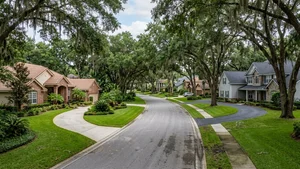
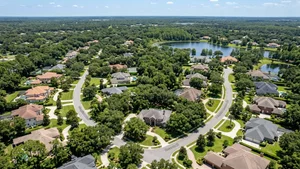
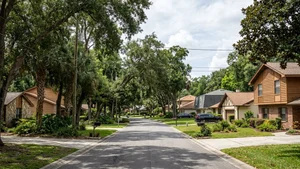
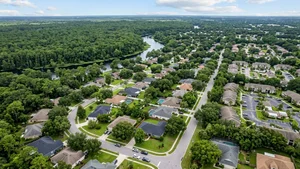
Longwood is single-family home territory. You'll find mature trees, larger lots, and a mix of mid-century houses alongside newer developments. It's not a neighborhood of townhome clusters and shared walls.
Property Types in Orlando
Orlando gives you more options - downtown high-rises, townhomes, and established single-family subdivisions all coexist here. Lot sizes shrink as you get closer to the urban core, but you gain immediate proximity to commercial centers. Condos and townhomes make up a meaningfully larger share of the inventory than anything you'd find in Longwood.
Property Taxes and County Millage Rates
This is one of the bigger practical differences between the two markets, and buyers sometimes don't pay enough attention to it until they're already under contract.
Longwood sits in Seminole County, so your tax bill is built on Seminole County and Seminole County Public Schools rates. For the 2025-2026 fiscal year, the Board of County Commissioners adopted a total millage of 8.2507 mills, and the school district approved a separate 5.249 mills.
Orlando properties fall under Orange County and the City of Orlando. Orange County's combined millage runs around 16.2 mills in most unincorporated areas - roughly $1,620 per $100,000 of taxable value. If you're in an incorporated part of Orlando specifically, that combined rate climbs to approximately 18.1 to 19.1 mills. The City of Orlando's municipal millage has held at 6.65 mills for 13 consecutive years, but the overall combined rate is still meaningfully higher than what Seminole County buyers are looking at. Run those numbers against your expected purchase price before you finalize what you can comfortably spend each month.
Commute Times and Transit Options
The drive from Longwood to downtown Orlando via I-4 is 13 to 15 miles. Under normal conditions you're looking at 20 to 25 minutes. When traffic gets heavy - or you're using a rideshare that routes differently - that same trip can stretch to 37 minutes.
State Road 434 and US Highway 17-92 both offer alternate routes when I-4 is backed up. Do yourself a favor and test your actual route at your actual commute time before you buy. Maps apps at noon on a Tuesday tell you almost nothing useful.
Riding the SunRail
If you're working downtown, the SunRail is worth a serious look. The trip from the Longwood station to Church Street station in downtown Orlando takes exactly 31 minutes - no traffic variables, no parking fees on the other end.
Tickets run approximately $2 to $4 per ride. For buyers who commute five days a week into the city center, this changes the math on Longwood considerably.
Parks, Dining, and Entertainment
Longwood's outdoor access is one of its genuine strengths. The Cross Seminole Trail is a paved multi-use path connecting several parks and natural areas. Big Tree Park has "The Phoenix," a successor to an ancient bald cypress. Spring Hammock Preserve runs hiking trails along the Wekiva River basin. Sanlando Park sits along the Little Wekiva River, and Reiter Park anchors the historic district. It's not a lineup that's trying to compete with urban entertainment - it's a different kind of amenity entirely.
Orlando's draw is density. Downtown offers the Church Street Station and Wall Street Plaza districts. The Mills 50 District and the Milk District are where you find eclectic bars and international restaurants. And just outside the city limits, Universal CityWalk, Disney Springs, and International Drive handle the large-scale entertainment side of things. If walkable access to that kind of variety matters to your daily quality of life, Longwood requires a 13 to 15-mile trip south to get there.
Frequently Asked Questions
Is it cheaper to buy a house in Longwood, FL or Orlando?
It depends on the property type, but Longwood's medians run slightly lower. Recent data shows a median of roughly $380,000 in Longwood versus $385,000 to $415,000 in Orlando. You'll also want to factor in the differences in property tax rates between Seminole and Orange counties - that gap affects your monthly payment more than buyers expect.
How long is the commute from Longwood, FL to downtown Orlando?
Via I-4, the 13 to 15-mile drive takes about 20 to 25 minutes under normal conditions. With heavier traffic or a rideshare, it can reach 37 minutes. The SunRail is a fixed 31 minutes from the Longwood station to Church Street station if you'd rather skip the highway entirely.
What are the property tax differences between Longwood, FL and Orlando?
Longwood falls under Seminole County, which adopted a total county millage of 8.2507 mills plus 5.249 mills for the school district for 2025-2026. Orlando properties are subject to Orange County and City of Orlando rates, with combined millage running approximately 18.1 to 19.1 mills in incorporated areas - a meaningful difference.
Do homes in Longwood, FL generally have larger lot sizes than in Orlando?
Yes. Longwood is a smaller suburban city of about 15,000 residents, and the housing stock is primarily single-family homes with larger lots. Orlando's urban environment means tighter lot sizes and a much higher percentage of townhomes and condominiums in the overall inventory.
Is the housing market more competitive for buyers in Longwood or Orlando?
Both markets are comparable, though Longwood homes move a bit faster. Longwood is averaging about 32 days on market with 3.9 months of supply. Orlando properties are averaging closer to 54 days on market.
What are the main downsides to buying a home in Longwood instead of Orlando?
The commute is the obvious one - 13 to 15 miles south to reach major hubs like the Mills 50 District or the Church Street Station area. And if high-density dining and entertainment are part of your regular routine, Longwood doesn't offer that within walking distance. You'll drive for it.