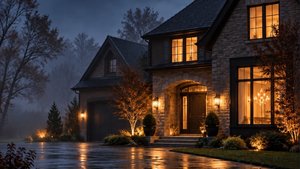
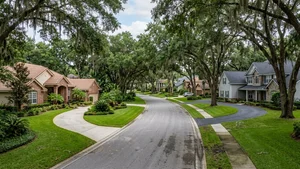
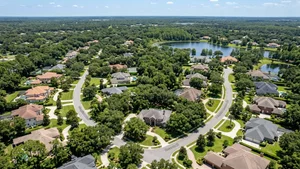
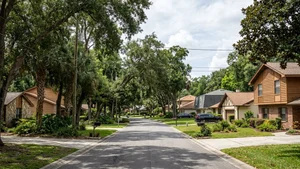
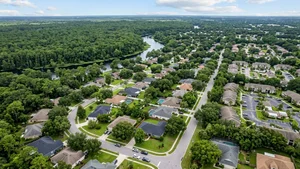
Longwood, FL is a historic municipality in Seminole County with an architectural heritage most buyers don't expect when they first start weighing the pros and cons of living in Longwood, FL. Mature trees, preserved 19th-century buildings, and modern suburban development sit alongside each other in a way that's genuinely unusual for this part of Florida.
The local real estate market currently sees a median sale price of around $380,000, with homes spending roughly 32 days on the market. There are typically about 60 homes available in recent months, so buyers drawn to the historic core and natural attractions will find an active but not overwhelming market. Knowing how this city got here - from a riverside homestead in 1873 to a fully incorporated Seminole County municipality - gives you real context before you start making offers.
Quick Facts About Longwood, FL
Longwood is an officially incorporated city within Seminole County, Florida - not just a neighborhood that adopted a name. It maintains its own civic identity while sitting squarely within the larger Orlando metro area, which matters more than people realize when you're sorting out taxes and services.
The architecture is the other thing worth knowing upfront. The city has held onto a remarkable amount of its 19th and early 20th-century building stock, centered on the nationally recognized Longwood Historic District. That's not decorative language - it's a formal designation, and it gives this municipality a visual connection to its past that most of its neighbors don't have.
Location Within Seminole County
Longwood sits entirely within Seminole County, which sounds like a minor detail until you've dealt with a town that straddles two counties. No split jurisdiction here - property taxes, school zoning, and municipal services all fall under Seminole County. The city is part of the Orlando–Kissimmee–Sanford Metropolitan Statistical Area, so residents get the regional economic access that comes with that without being swallowed by the city proper.
The Meaning and Origin of the Name
Edward Warren Henck arrived in the area from Boston in November 1873, and he's the reason the city is called Longwood at all. He named it after a suburb of Boston that he'd helped lay out earlier in his career as a young engineer - a straightforward piece of New England nostalgia transplanted to Central Florida.
That connection shaped the settlement's early identity in ways that still show up if you look. A familiar name helped attract other northern transplants looking for Florida homesteads, and the civic brand Henck established has now lasted over 150 years.
Establishing the Town Identity
Before Henck arrived, the surrounding region was largely undeveloped wilderness along the St. Johns River. The name gave the settlement a formal identity it didn't have before.
Worth noting for anyone who's confused by the overlap: Longwood, FL is a distinct place from Longwood University in Virginia or Longwood Gardens in Pennsylvania. The local government and historical society continue to honor Henck's original naming decision, and the name belongs to this Seminole County municipality in its own right.
Founding and Early Settlement Timeline
The earliest documented settler, John Neill Searcy, arrived from Tennessee in March 1873. Henck followed a few months later. Both men traveled by steamboat up the St. Johns River to Sanford before making their way to the Longwood area - not a casual trip by any standard.
The city's formal establishment is generally traced to 1878, when the Longwood Post Office was founded with Henck serving as the first postmaster. The local economy built itself around lumbering and related building industries, which were reportedly the largest in Florida by 1883. That's a significant claim for a settlement that had existed for barely a decade.
Incorporation and Later Growth
There's some ambiguity in the historical record - at least one source references an early incorporation attempt in 1883 - but most accounts put the official incorporation as a city in 1923, driven by the Florida land boom and the wave of development it brought.
After lumber, the local economy shifted to citrus farming and expanded alongside the South Florida Railroad Company. Those industries carried the city through the 20th century and laid the groundwork for the residential neighborhoods you're looking at today.
Historic Landmarks and Museums
The Longwood Historic District covers 19 acres and contains 37 historic buildings. It's bounded by West Pine Avenue, South Milwee Street, Palmetto Avenue, and County Road 427 - a nationally recognized area and the city's architectural centerpiece.
Beyond the central district, the Columbus Harbor neighborhood around Fairy Lake is another preserved area worth knowing about. It was originally homesteaded by the Hartley family and reflects the same 19th-century building styles that characterize early Central Florida development. These aren't reconstructions. They're the actual structures.
Notable Sites to Visit
The Bradlee-McIntyre House is a Queen Anne-style cottage built in 1885, now operating as a historic house museum run by the Longwood Historic Society. Tours run on Wednesdays and Sundays - a look at Victorian-era Florida living that's harder to find than you'd think.
Other landmarks include the Longwood Hotel, built in 1885 and added to the National Register in 1984, and the Inside-Outside House. The Historic Civic Center has been a community hub since 1880 and is still maintained by the local historical society today.
Cultural Identity and Notable Residents
Longwood's cultural identity runs through its historical preservation and its early industrial roots in lumber and citrus. There's no single signature food or founding festival, but the city has a genuine sense of place built around its historic district and community events.
It's also produced - or at least claimed - a fairly eclectic list of well-known residents over the years.
Famous Figures from the Area
Mandy Moore moved to Longwood at age two and spent her formative years growing up in the city. That's the piece of local trivia most people know.
The list doesn't stop there. Professional soccer player Graham Zusi, NFL player Jared Bernhardt, and the late theologian R.C. Sproul have all been connected to the city. Varied backgrounds, which tells you something about how the community has developed over the past few decades.
Frequently Asked Questions
What county is Longwood, FL in?
Longwood is located entirely within Seminole County. It's part of the broader Orlando–Kissimmee–Sanford Metropolitan Statistical Area.
Is Longwood a city, town, or neighborhood?
It's an officially incorporated city. Most sources put the official incorporation date at 1923, during the Florida land boom.
How did Longwood, FL get its name?
Early settler Edward Warren Henck named it after a Boston suburb he'd helped lay out while working as a young engineer.
When was Longwood, FL founded?
Settlement began in the early 1870s, with the first documented settlers arriving in 1873. The post office was established in 1878, and the city officially incorporated in 1923.
Does Longwood, FL have a historic downtown district?
Yes - the Longwood Historic District covers 19 acres and contains 37 historic buildings, bounded by West Pine Avenue, South Milwee Street, Palmetto Avenue, and County Road 427.
What is Longwood, FL known for?
Its 19th-century architecture, historical preservation, and scenic natural attractions. Historically, it was known for having the largest lumber and building industries in Florida by 1883.
Are there any famous people from Longwood, FL?
Several. Singer and actress Mandy Moore, NFL player Jared Bernhardt, soccer player Graham Zusi, and theologian R.C. Sproul have all been connected to the city.