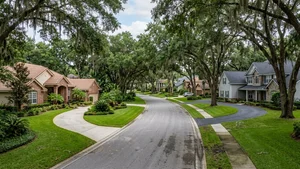
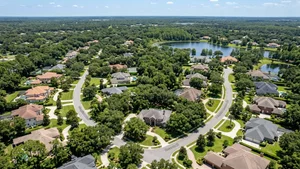
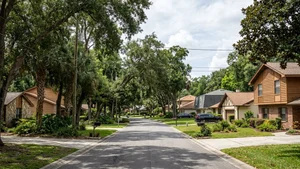
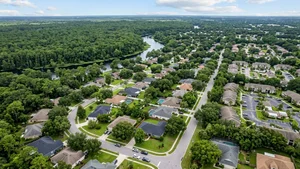
People weighing the pros and cons of living in Longwood, FL tend to zero in on housing costs and commute times - fair enough, but the local employment picture matters just as much. Longwood's job market leans on healthcare, logistics, and professional services, all of it backstopped by the sheer economic weight of the greater Orlando metro.
If you're buying here, that foundation is worth understanding. The median home sale price in Longwood is currently around $379,749, properties are spending about 32 days on the market, and there's roughly 3.9 months of housing supply available. What you expect to earn locally - and how stable that income looks - should be part of your budget math from the start.
State of the Longwood Job Market in 2026
Longwood's population is estimated at 17,275 in 2026, up 12% since the 2020 census. That works out to roughly 2.27% annual growth, which is steady rather than explosive - the pace of a city that's genuinely useful to live in, not just hyped. During business hours, the daytime population swells past 21,000 people, which tells you something about the local commercial activity.
Employment grew 2.01% year-over-year, moving from about 8,110 workers in 2023 to 8,280 in 2024. Longwood doesn't publish its own unemployment rate, so the closest proxy is Seminole County, which sat at 4.3% in April 2026 and 4.4% in July 2026 - consistently among the lowest figures in Central Florida.
How Longwood Fits into the State Economy
Florida's seasonally adjusted unemployment rate hit 4.5% in August 2026, after spending the earlier part of the year bouncing between 4.3% and 4.8%. Seminole County tends to track those statewide numbers closely, though it often comes in slightly lower.
For job seekers thinking about the bigger picture, Florida's broad employment indicators are holding steady. That matters for Longwood specifically - the Orlando suburbs benefit when the state's overall hiring climate is stable.
Fastest-Growing Industries and Roles in Seminole County
Healthcare and hospitality are leading regional hiring across the Orlando metro in 2026. The opening of Universal's Epic Universe has driven a significant surge in leisure and hospitality roles throughout the area. The technology sector - particularly artificial intelligence - keeps expanding, and professional and financial services are moving alongside it.
That said, not everything is trending up. Construction and financial activities have cooled year-over-year in 2026, and data from CareerSource Central Florida shows a decline in government employment over the past year. If you're job hunting right now, private-sector healthcare and hospitality are your strongest immediate options.
Regional Hiring Trends by Sector
The most openings are concentrated in medical facilities, hotels, and entertainment complexes. The Orlando metro supports more than 1.3 million workers overall, with healthcare, aerospace, tech, and advanced manufacturing making up a large share of that base.
Government roles are contracting slightly, but the private sector has been absorbing many of those workers into professional services. If you're targeting immediate placement, local hospital systems and the hospitality vendors tied to the tourism industry are worth your attention first.
Top Employers Driving the Longwood Economy
Healthcare and logistics anchor the local employment base. According to the City of Longwood's recent Annual Comprehensive Financial Report, Orlando Health - South Seminole Hospital is the largest private employer in the city, with 1,022 employees.
Industrial and service companies fill out the rest of the top tier. Kustom employs 700 people locally, UPS comes in at 653, and Comprehensive Energy Services accounts for 439. D&B Building Services has 349 employees, Collis Roofing has 234, and FedEx and Pemberton Attachments also maintain a significant local workforce.
Commuting and Regional Job Hubs
Many Longwood residents commute out to larger corporate campuses in neighboring cities. Aerospace and advanced manufacturing opportunities exist throughout the broader Orlando metro, but those roles often mean a drive down I-4 or State Road 434.
Specific public-sector employer counts for Seminole County aren't published, but local municipal offices, public schools, and county administration buildings provide steady work for residents who'd rather stay close to home.
Average Salaries and Household Income
Longwood residents earn more than the Florida average. The city's median household income is estimated at $78,548 for 2026, and the 32750 ZIP code pushes that further - averaging $86,125. Local officials have noted household income growth of nearly 9% in a single recent year, which is a meaningful jump.
For comparison, Florida's statewide median household income sits roughly between $55,660 and $65,805. If you're relocating from out of state, set those local salary averages against Longwood's median home sale price of approximately $379,749. That comparison will tell you a lot about your actual purchasing power here.
Highest-Paying Local Industries
The top-paying work in Longwood clusters in technology, science, and medical fields. The Information sector leads with an average salary of $78,428. Professional, Scientific, and Technical Services follow at $74,470. Health Care and Social Assistance averages $66,755 - which makes sense given Orlando Health's footprint in the city.
Local Job Hunting Resources and Public Sector Opportunities
Seminole County is served by CareerSource Central Florida, the regional workforce development board covering Lake, Orange, Osceola, Seminole, and Sumter counties. They track labor market data and offer resources for job seekers across the region.
If you're looking for training programs or trying to identify which industries are actively hiring, CareerSource Central Florida updates its regional statistics regularly. It's a practical starting point whether you're targeting municipal roles or private-sector work.
Finding Remote and State Jobs
Remote work is a real option for Longwood residents who'd rather not deal with I-4. A lot of professionals in Information and Professional Services work from home while pulling salaries from companies based in downtown Orlando or out of state entirely.
For state or municipal roles, keep an eye on CareerSource Central Florida's portals alongside the City of Longwood's direct postings. Regional government employment has dipped slightly, but local administrative and support positions do open up on a regular basis.
Frequently Asked Questions
Is it hard to find a job in Longwood, Florida?
It depends on your industry. Healthcare, hospitality, and professional services are actively hiring and expanding in the region. Job seekers in construction or financial activities might face a tighter market, though - both sectors have seen year-over-year cooling in 2026.
What jobs are in high demand in Longwood and Florida?
Healthcare and leisure/hospitality are the fastest-growing fields in the Orlando metro area for 2026. Technology roles, including artificial intelligence, and professional services are also seeing steady demand across Seminole County.
What are the biggest employers in Longwood?
Orlando Health - South Seminole Hospital is the largest private employer in the city, with 1,022 employees. Other major local employers include Kustom, UPS, Comprehensive Energy Services, and D&B Building Services.
What is a good salary in Longwood, Florida?
A salary at or above the city's median household income of $78,548 is a reasonable benchmark for the area. In the 32750 ZIP code, the average household income reaches $86,125, which comfortably exceeds the Florida state median.
What is the unemployment rate in Longwood, Florida?
Longwood doesn't publish a standalone city unemployment rate. The broader Seminole County area had a 4.4% unemployment rate in July 2026 - a figure that consistently ranks among the lowest in Central Florida.
Where are the best local resources to find municipal or remote jobs in Longwood, FL?
CareerSource Central Florida is the primary workforce development board serving Seminole County. They offer job placement services, track regional labor data, and connect residents with local, municipal, and remote opportunities.