Longwood, FL sits just north of Orlando in Seminole County - suburban by feel, but with a direct line into the broader Central Florida metro. If you're looking at the pros and cons of living in Longwood, you probably want to know what you're going to spend before you start touring homes or signing anything.
The short answer: housing drives almost everything here. What you pay per month hinges on when you enter the market, whether you're buying or renting, and how current inventory shakes out. The numbers below reflect 2026 conditions.
A Quick Look at Longwood Living Costs
Depends on who you ask. AreaVibes puts Longwood's overall cost-of-living index at 111 - that's 11% above the national average of 100 and about 9% above the Florida state average. BestPlaces scores it a bit lower at 105.7. HomeSnacks and City-Data land closer to the national baseline, at 99 and 92 respectively.
The spread tells you something useful: the variation comes down to how much weight each source puts on recent real estate transactions. Strip out housing, and most of Longwood's day-to-day costs sit at or slightly below national averages. Utilities, healthcare, transportation - none of those are what's pulling the index up.
How Longwood Compares to the State and Nation
When housing isn't in the equation, Longwood is a relatively average place to live by the numbers. That's not a knock - it means your grocery runs and doctor's visits aren't going to shock you.
Your personal cost of living here will track closely with when and where you buy or rent. Seminole County prices have shifted over the past few years, so the index you saw last year may not reflect what you'd spend closing a deal today.
The Verdict on Affordability
Longwood costs more than rural Florida. It costs less than premium spots in downtown Orlando. It sits in that middle band of Central Florida suburbs - not a bargain, not a stretch for most buyers who are already shopping this county.
Buyers relocating from the Northeast or West Coast typically find the prices manageable. If you're coming from a smaller town in the Midwest or South, expect your monthly housing number to step up.
Housing Prices and Rent in Longwood
The median sale price for a home in Longwood is currently around $379,749. Homes are averaging 32 days on market, and sellers are seeing sale-to-list ratios of about 98.5%. With roughly 60 homes actively listed and 3.9 months of supply, there's a moderate amount of inventory out there - but "moderate" doesn't mean pressure-free. About 15% of recent sales closed above asking, so be ready for some competition on anything well-priced.
Current Home Prices and Real Estate Trends
The median gives you a baseline, but actual costs vary a lot depending on what you're looking at. Townhomes and older single-family houses often come in below that figure; larger homes on substantial lots push well above it.
One line item buyers sometimes underestimate: HOA fees. They're common in Seminole County subdivisions and while they cover community upkeep, they're a fixed monthly cost on top of your mortgage. Factor those in early.
What to Expect for Monthly Rent
According to recent RentCafe data, average rent in Longwood runs $1,949 per month. One-bedrooms typically average around $1,594; two-bedrooms come in closer to $2,070. Apartments.com shows a lower average around $1,553, and Apartment List puts two-bedrooms at $2,124. The spread between platforms is real - the final number will depend on the complex's age, amenities, and how close it sits to I-4.
Housing Compared to the Greater Orlando Area
Longwood generally gives you more space for your money than downtown Orlando, though its median home price can run higher than some of Orlando's outer neighborhoods. You're trading immediate urban access for larger lots and established suburban layouts - that's the deal.
For renters, Orlando has a wider variety of multi-family apartment complexes. Longwood leans more toward single-family homes for lease alongside its traditional apartment communities, which shapes what your options look like.
Everyday Monthly Expenses
Your mortgage or rent payment is the big number, but it's not the whole picture. Salary.com data for 2026 shows that daily living expenses in Longwood - utilities, transit, medical care - generally run slightly below the national average.
A single person and a family of four will see very different baseline numbers, so it's worth running both scenarios if your household situation is in flux.
Utilities and Groceries
For a single person, energy and utility costs average about $166 per month. A family of four lands around $284. Those figures run about 5.3% below the national average - though that discount shrinks in a hurry between May and September, when air conditioning drives power bills up. AreaVibes does flag a utility index of 110, reflecting the high cooling demand that comes with Central Florida summers. That's worth building into your budget.
Commuting and Transportation
Transportation runs about $367 a month for an individual and $781 for a family of four - gas, maintenance, insurance combined. That's roughly 8.2% under the national average. Most residents drive, using Route 17-92, SR 434, or I-4 to reach Orlando and surrounding employment hubs. Your actual fuel bill will track with how far you're commuting.
Healthcare Costs
Healthcare in Longwood is one of the clearer wins in the budget. Salary.com estimates $236 a month for a single person and $631 monthly for a family of four. That's about 21.2% below national benchmarks - a meaningful gap if healthcare is a significant line item for your household.
Local Taxes in Seminole County
Florida's lack of a state income tax is a genuine budget advantage. Local services get funded through sales and property taxes, so those are the numbers you need to understand before you finalize what your monthly obligation looks like.
Sales Tax Rates
The combined sales tax rate in Longwood is 7.00% - Florida's 6.00% state rate plus a 1.00% Seminole County local levy. The city of Longwood doesn't add any municipal sales tax on top of that, so 7% is what you're paying on retail purchases and restaurant meals.
Property Tax Expectations
Seminole County's effective property tax rate generally runs between 0.65% and 0.89% of a home's taxable value, with a combined millage rate sitting roughly between 15.18 and 15.5 mills per $1,000 of assessed value. At 0.89%, that's below the national median of 1.02%. On a home valued around $386,900, you're looking at an annual tax bill of roughly $2,599 to $3,210, depending on your specific district assessments and any homestead exemptions you qualify for.
Income and Salaries in the Area
The median household income in Longwood currently sits around $78,220, according to City-Data. U.S. News puts the average closer to $83,954, which tracks almost exactly with the national median of $83,181. HomeSnacks comes in at $75,197. Across all three sources, you're looking at a cluster in the high $70,000s to low $80,000s.
Average Household Income
That income range supports the current housing and rental market - which is exactly what you'd expect in a stable suburban county. Dual-income households frequently exceed these medians, giving more purchasing power when it comes time to make an offer.
Budgeting for Local Costs
The standard rule lenders use is keeping housing costs below 30% of gross monthly income. With average rents around $1,949, you'd want to be bringing in at least $6,500 a month to stay comfortable under that threshold. If you're buying near the $379,749 median, you'll need to run your specific mortgage, taxes, and insurance numbers to figure out what salary supports that purchase. The absence of state income tax does meaningfully stretch what's left over.
Why Homes in Longwood Command These Prices
With roughly 3.9 months of housing supply and about 60 active listings, inventory is limited enough to keep buyers competing. Demand has stayed steady, and property values have held up because of it. A few specific factors explain why this particular market holds its price.
Market Drivers
I-4 access is a big part of it. Buyers are willing to pay to shorten their daily commute into downtown Orlando or the business parks scattered around the metro. That convenience has real dollar value in a region where traffic is a daily reality.
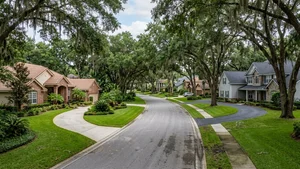
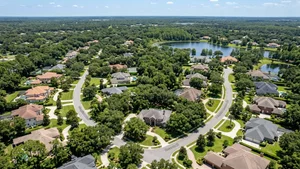
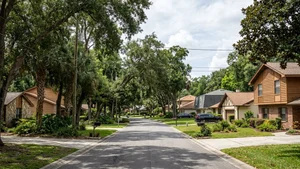
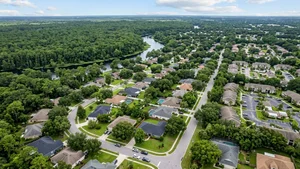
Mature landscaping, established subdivisions, and local parks also pull buyers toward Longwood over newer construction further out. There's something to be said for a neighborhood that's already figured out what it is.
Property Values and Demand
With 15% of homes selling above asking price, the demand picture is clear. Sixty active listings isn't a lot of inventory for a market this size, which keeps the median price firm around $379,749. This isn't a market where prices drift down to match rural Florida - the location won't allow it.
Comparing Longwood to Nearby Cities
Longwood doesn't exist in a vacuum. Housing costs here differ from neighboring towns in Seminole and Orange counties, and running a quick comparison will tell you whether this is the right fit for your financial situation.
A Sample Monthly Budget
For illustration only: a single renter might spend $1,594 on a one-bedroom, $166 on utilities, $367 on transportation, and $236 on healthcare - a baseline of roughly $2,363 before groceries, insurance, or anything discretionary. A family of four buying at the median would be looking at a mortgage on a $379,749 property, $284 for utilities, $781 for transit, $631 for healthcare, and property taxes of about $260 a month. That gives you the fixed cost picture before the smaller variables start stacking up.
Alternative Areas to Consider
If Longwood is pushing the upper edge of your budget, Casselberry or Altamonte Springs sometimes offer lower entry prices on condos and townhomes. If you're after larger estates or newer construction, Lake Mary or Sanford are worth a look. Every town in Seminole County carries its own median price points and property tax assessments, so it's worth running the numbers on a few options side by side.
Pros and Cons of Moving to Longwood
AreaVibes gives Longwood a Livability Score of 81 out of 100, factoring in local amenities, commute times, and economic stability. That's a solid number, and it holds up when you look at the specifics.
The Benefits and Drawbacks
On the plus side: a strong housing market, proximity to Orlando, and below-average costs for utilities and healthcare. No state income tax is a real financial benefit - not just a talking point.
The downside is straightforward. Housing costs are the primary reason Longwood's cost-of-living index runs above the national average, which makes it pricier than rural Florida alternatives. And if you're commuting on I-4 during peak hours, you already know what that's going to cost you in time.
Area Livability Factors
The 81 out of 100 from AreaVibes reflects a town that balances suburban amenities with reasonable commuter access. The same source notes that crime rates in Longwood run about 5% below the Florida state average - a factor that contributes to that overall rating and, practically speaking, affects how your daily life feels here.
Frequently Asked Questions
Is it expensive to live in Longwood, FL?
Longwood is slightly more expensive than the national average, primarily due to housing costs. Everyday expenses like healthcare and utilities are lower than average, but the overall cost-of-living index ranges from 99 to 111 depending on the source.
What salary do you need to live comfortably in Longwood, FL?
To afford average rent of $1,949 without exceeding 30% of your income, a household should earn at least $78,000 a year. The median household income in the area currently sits between $75,197 and $83,954.
Why is Longwood so expensive?
Longwood's pricing reflects its location in Seminole County and the easy commute into Orlando. A limited housing inventory of roughly 3.9 months of supply also keeps median home prices stable.
How does the cost of living in Longwood compare to Orlando?
Longwood is a suburban alternative to Orlando, generally featuring larger lots and established neighborhoods. While its overall cost of living is similar to the greater Orlando metro, buyers often pay a premium for single-family homes here compared to Orlando's denser housing options.
How much are average property taxes in Longwood, FL?
Seminole County's effective property tax rate ranges from 0.65% to 0.89%. For a home valued around $386,900, the annual property tax bill typically falls between $2,599 and $3,210.
Is Longwood, FL a good place to live?
Longwood earns an 81 out of 100 Livability Score from AreaVibes. Crime rates run about 5% below the state average, and the town offers convenient access to major Central Florida highways.